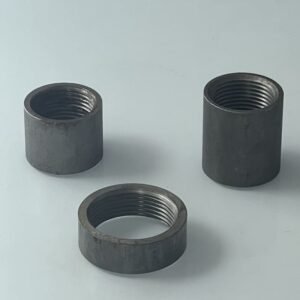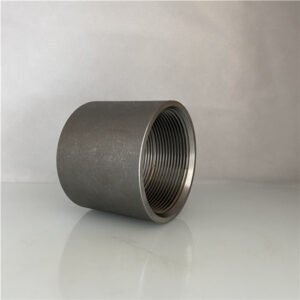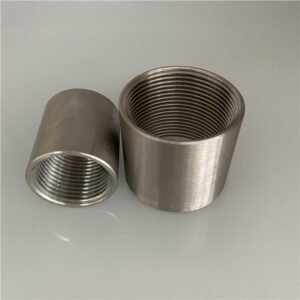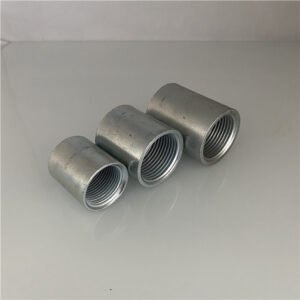
Full, half or reducing — threaded or socket-weld — in black carbon steel, galvanized carbon steel, or 304/316 stainless steel. Pick a configuration below to see sizes, standards and pricing.
Materials
Size range
lead time
Standard MOQ
START HERE — PICK A CONFIGURATION”
3 options, 1/8″–12″
01 • MOST COMMON
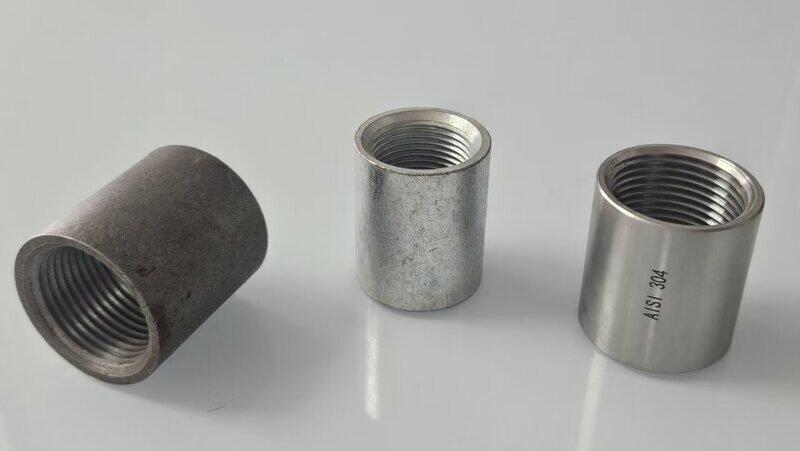
Same-size pipe on both ends, threaded on both sides — the standard way to extend a straight run.
See sizes →
02 • FOR WELD-IN JOBS
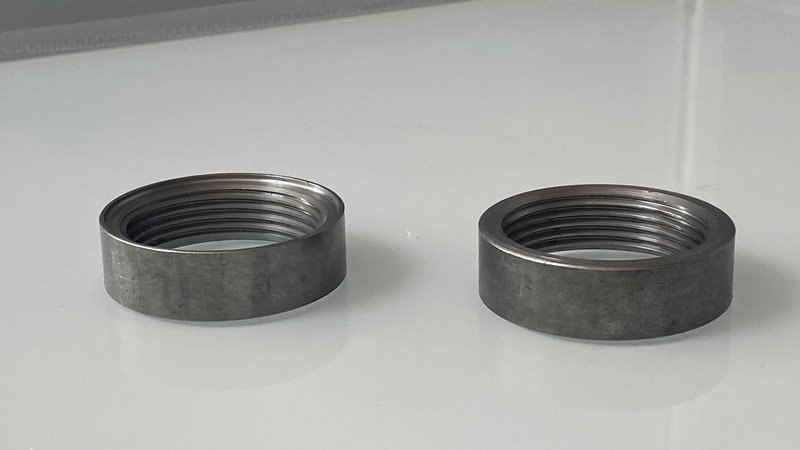
One threaded end, one plain end for socket-welding onto a vessel, header or pipe wall.
See sizes →
03 • STEP-DOWN
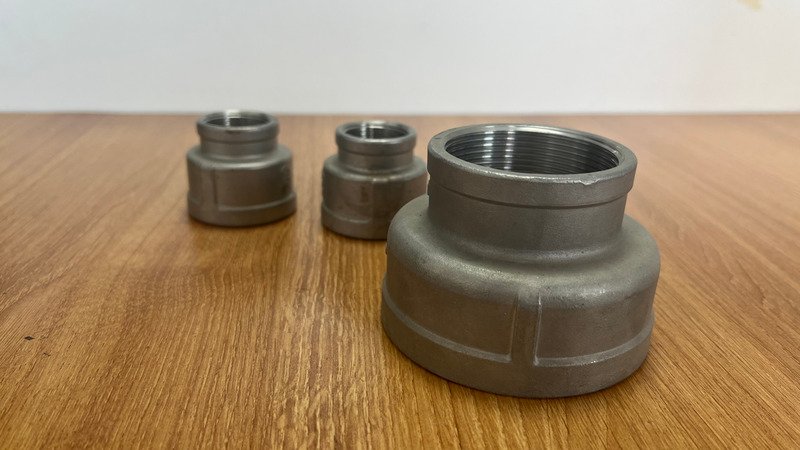
Steps down between two different pipe sizes in a single fitting – no separate reducer needed.
See sizes →
Send the application, we’ll match it for you.
Three checkpoints, whether it’s threaded or welded — skip one and the joint is the first thing that fails.
Cut square, deburr, and confirm the pipe OD matches the coupling bore before anything else.
Screw on for NPT/BSPT couplings, or tack and fillet-weld for socket-weld configurations.
Check the joint before it goes into service — especially on welded, high-pressure runs.
No brass in this line — coupling loads and weld requirements call for steel. Click through for full specs.
Black Carbon Steel
A106 / A53
View sizes →
Galvanized Carbon Steel
A153 coating
Hot-dip zinc coating for anything that gets rained on, buried, or run outdoors.
View sizes →
Stainless Steel
A312 (304/316)
304/316 grade – for food processing, marine decks, or anywhere corrosion isn’t allowed.
View sizes →
The decision that matters more than material — it determines how the coupling actually goes into your system.
THREADED
Screws directly onto threaded pipe ends — no welding equipment or hot-work permit needed on site.
SOCKET-WELD
Pipe is inserted into the socket and fillet-welded in place — a permanent, leak-tight joint.
Tap a material to expand full specs — look and feel, corrosion resistance, and where it’s typically used.
A snapshot of what’s moved through the shop floor lately.
A coupling makes a permanent or semi-permanent joint. A union has a third nut that lets you disconnect the pipe without cutting it — use a union where you’ll need to service the line later.
Low pressure and may need servicing later — go threaded. Critical, high-pressure or high-temperature line — socket-weld gives a more reliable, permanent joint.
Yes, a full coupling is the standard way to splice a broken or cut pipe back together, as long as both ends can be threaded or prepped for welding.
By the two nominal pipe sizes it connects, larger size first — e.g. a 3/4″ x 1/2″ reducing coupling steps a 3/4″ line down to 1/2″.
Send us the application — we’ll tell you exactly what to order.