Introduction
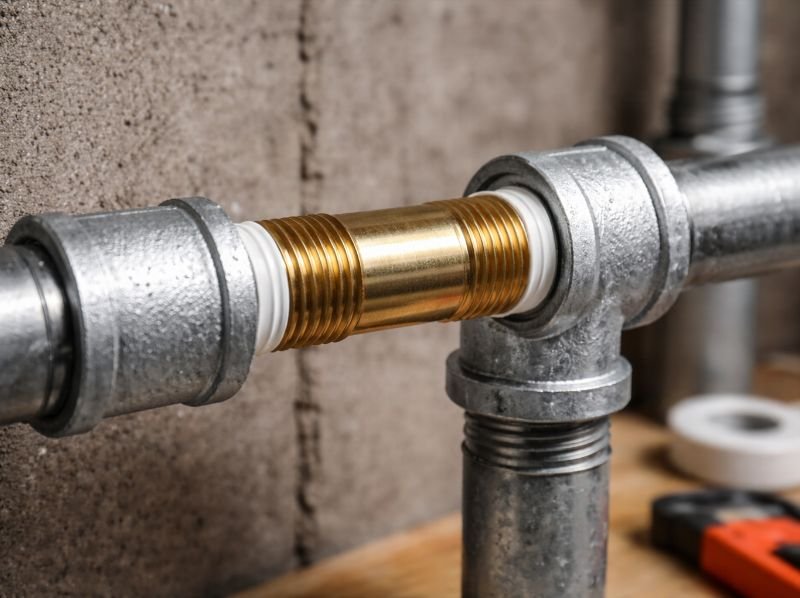
Pipe nipple is a short pipe with male threaded ends.
They connect female thread fittings in a piping system.
As a pipe nipple manufacturer, we work closely with engineers and procurement teams.
This guide answers the most common questions.
It covers pipe nipple connections step by step.
However, it also explains why each step matters — not just what to do.
Quick Answer
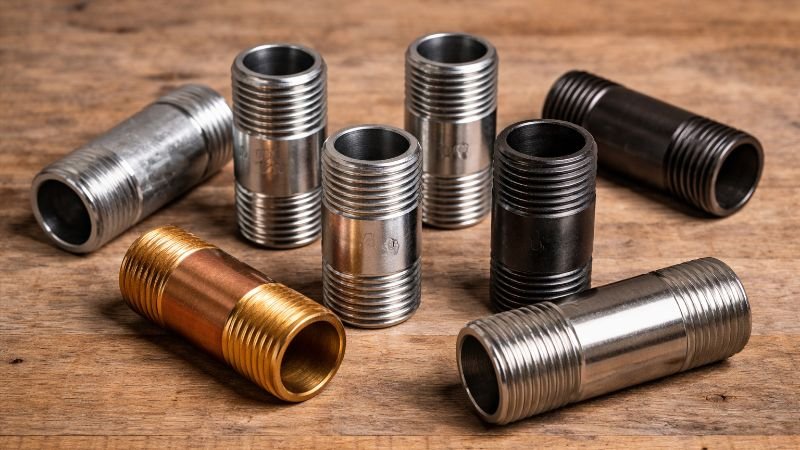
How to install pipe nipples?
To install a pipe nipple connection:
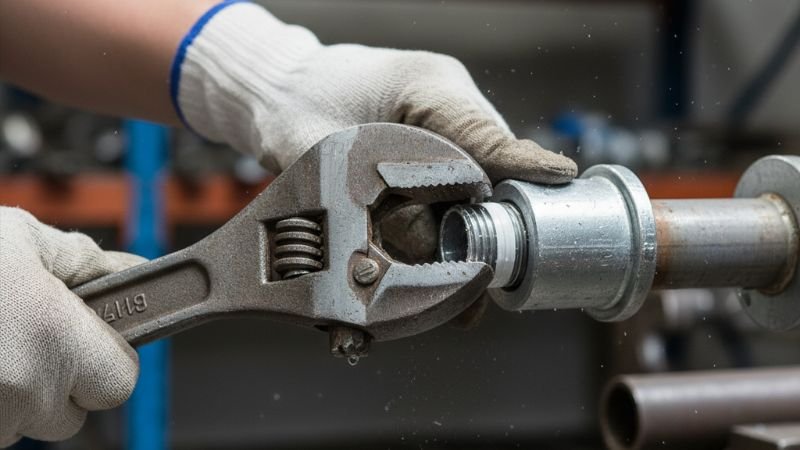
Clean the threads, apply PTFE tape or thread sealant, hand-tighten first, then use a pipe wrench to turn 2–3 additional turns.
Do not overtighten.
Always pressure-test the connection before putting the system into service.
Install Pipe Nipple Steps
A successful pipe nipple connection depends on several key steps.
Step 1 — Inspect the threads.
Before installation, inspect all threads. Damaged or cross-threaded connections lead to leaks.
So, never force a fitting onto a nipple.
Step 2 — Choose the right thread standard.
Confusing different types of threaded fittings can cause immediate leaks.
| Thread Type | Region | Taper | Compatibility |
|---|---|---|---|
| NPT | North America | 1/16 in/in | NPT fittings only |
| BSPT | UK / Asia | 1/16 in/in | BSPT fittings only |
| BSPP | UK / EU | Parallel (none) | Requires O-ring or gasket |
Step 3 — Apply thread sealant.
We recommend PTFE tape for most applications.
Anaerobic thread sealants work well in higher-pressure systems.
Wrap PTFE tape clockwise — in the same direction as thread engagement.
Step 4 — Hand-tighten first.
Always start by hand. This ensures threads engage correctly.
After that, use a pipe wrench to tighten 2 to 3 additional turns past hand-tight.
Step 5 — Pressure test the connection.
After installation, pressure-test at 1.5× the rated operating pressure.
However, never use air or gas for pressure testing in enclosed spaces — always use water.
Common Mistakes
Overtightening: Excess torque cracks fittings or strips threads.
Mixing thread standards: NPT and BSPT look similar but are not interchangeable.
However, many installers assume they are compatible — they are not.
No PTFE tape on parallel threads: Parallel threads (BSPP) require a gasket or O-ring seal.
PTFE tape alone is insufficient for parallel-threaded pipe nipple connections.
Incorrect nipple length: Unsuitable length creates mechanical stress on adjacent fittings.
Also, it can influence the thread connection.
Engineering Tips
We share these tips based on real project feedback from engineers who use our products.
- Select the right nipple type for your application.
Close nipples minimize face-to-face distance.
However, they are harder to disassemble. Hex nipples allow better wrench access.
- Use stainless steel threaded pipe fittings in corrosive environments.
For example, chemical processing and marine applications benefit significantly from 316 SS material.
- Account for thermal expansion.
In high-temperature systems, pipe nipple connections must allow for expansion.
Therefore, select nipple length and material accordingly.
- Use pipe couplings to join two nipples when needed.
Couplings allow you to adjust run lengths without replacing full pipe sections.
- Match schedule ratings.
A Schedule 40 nipple paired with Schedule 80 fittings creates a potential weak point.
Therefore, best to use the same wall thickness.
- For high-vibration equipment, use Lock-tite or mechanical locking sealants.
PTFE tape alone may loosen over time in vibrating machinery.
Pro tip: Point out material grade, thread standard, schedule, and length when purchasing pipe nipples. This speeds up our quoting process.
Conclusion
Installing a pipe nipple correctly requires the right thread match, sealing, and controlled torque.
In addition, pressure testing is necessary for safe system operation.
We supply steel pipes, pipe couplings, and stainless steel forged fittings worldwide.
Contact our technical team if you have questions about material or thread specifications.
FAQ
1. What is the correct number of PTFE tape wraps for a pipe nipple?
2. How do I know if a pipe nipple connection is tight enough?
A correctly tightened NPT connection is typically 2 to 3 turns past hand-tight.
In addition, a successful pressure test at 1.5× operating pressure confirms the joint is secure.
Do not rely on visual inspection alone.
3. Can I reuse a pipe nipple after disassembly?
In many cases, yes — however, we always recommend inspecting threads carefully before reuse.
Remove old PTFE tape completely. If thread damage is visible, replace the nipple.
For critical applications, we recommend using a new nipple each time.
4. What is the difference between a close nipple and a hex nipple?
5. Which material should I specify for a pipe nipple in a steam system?
For steam applications, we recommend carbon steel (ASTM A106 Grade B) or stainless steel.
In addition, always verify that pipe couplings and all adjacent fittings are rated for the same service conditions.
6. How do I choose the right pipe nipple length?
Nipple length is determined by the face-to-face distance required between two fittings.
However, always account for thread engagement depth on both ends.
We provide procurement recommendations for pipe fittings — contact us with your layout drawings.