1. What is a Forged Coupling?
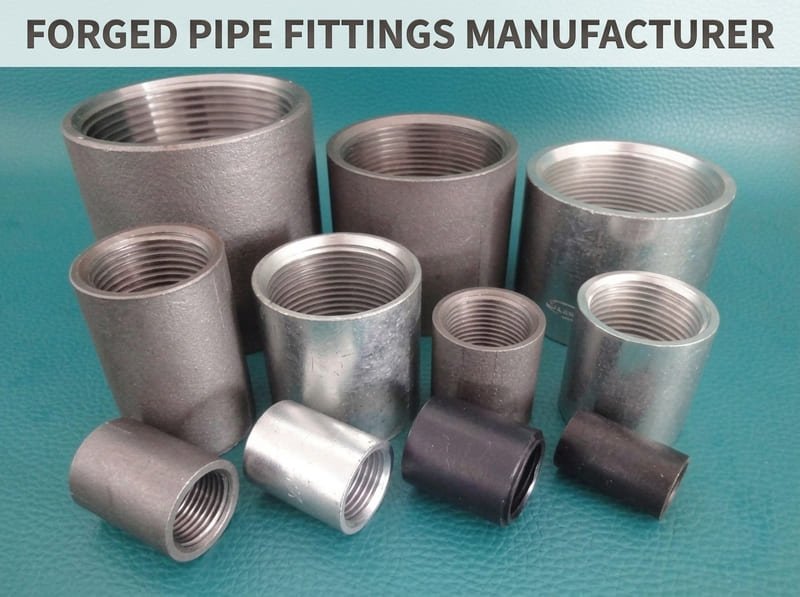
Forged pipe fittings are pipe fittings made by forging techniques.
A forged steel coupling is a high-strength industrial pipe fitting manufactured through heating and die forging to connect, extend, or repair high-pressure or high-temperature pipeline systems.
Making the steel pipe coupling screwed into a threaded hole of piping ensures that the screwed reaches the fastening point and creates a tight connection between the pipe coupling and the pipeline.
2. Types and Configurations of Forged Couplings
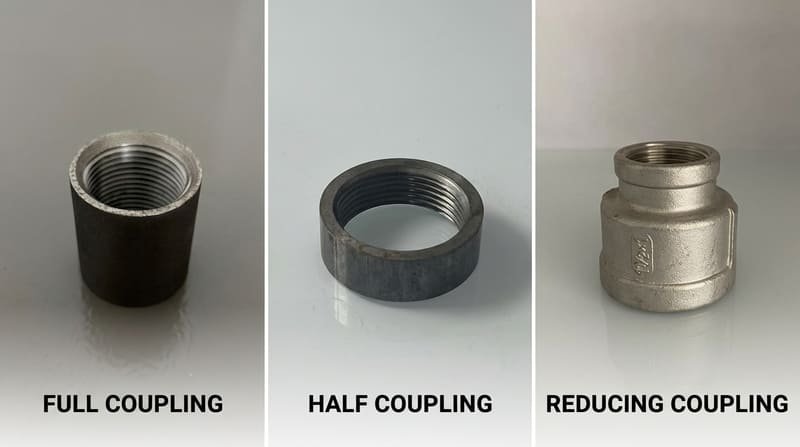
Full Coupling
A full coupling connects two pipes of the same diameter into one line. Two pipes must have the same NPS. They are cylinder-shaped. They maintain stable, uninterrupted flow and constant pressure without altering the pipeline size.
Half Coupling
A half coupling is commonly designed with a female threaded end too. Its appearance is shorter.
Reducing Coupling
The reducing coupling connects two pipes with different diameters. Reducing couplings can change flow velocity and pressure when fluid from one size moves to another.
3. Materials, Pressure Classes and Standards
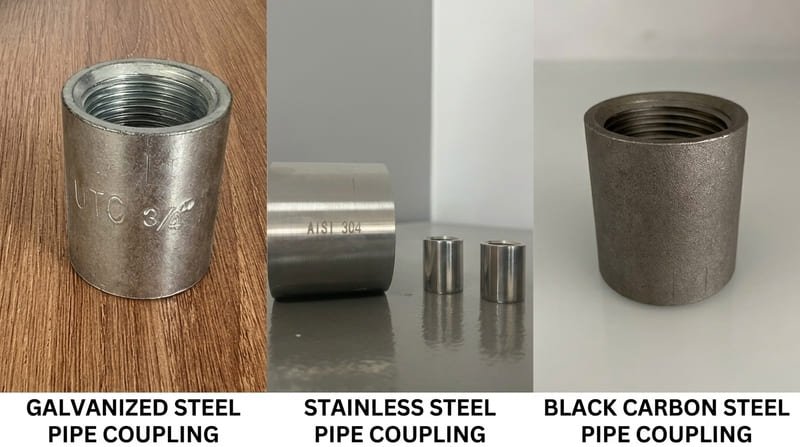
Forged steel couplings are primarily manufactured from carbon steel and stainless steel.
Materials
Carbon Steel (ASTM A105): A common material for high-pressure and high-temperature industrial plumbing. It is used to increase strength and properties in oil, gas, steam, and water systems. Carbon steel can achieve extra anti-corrosion resistance with a galvanized coating.
Stainless Steel (ASTM A182): Used in corrosive environments, chemical processing, hygiene, or high-purity wire; anti-rust properties are important inside.
Pressure Classes
Forged pipe fittings have different pressure classes depending on whether they are for threaded or socket-weld connections.
They are manufactured to the ASME B16.11. They have different pressure classes depending on the end connection.
Common pressure classes include Class 2000, Class 3000, Class 6000, and Class 9000.
The specified pressure class relates to product design and wall thickness; wall thickness is the basis for rating. It doesn’t specify a fixed working pressure in psi.
Standards
Forged steel couplings follow dimensions, materials, and threading in ASME B16.11.
4. Applications of Forged Couplings
Forged steel couplings are high-strength couplings that connect two pipes of the same or transitional diameter, where systems need special pressure and temperature resistance.
Key industries and applications include petroleum and gas processing plants; chemical and petrochemical plants; electric power generation; hydraulic machinery; and pharmaceutical and food processing.
5. Benefits of Forged Couplings
Compared with cast or pressed couplings, forged steel couplings offer excellent mechanical strength, high pressure and temperature resistance, and a stronger construction.
Strict tolerances and thicker walls can prevent cracking, rupture, and leakage under severe vibration or extreme load.
Commonly manufactured from ASTM A105 carbon steel or 304/316 stainless steel, can withstand harsh chemical, marine, and high-temperature environments.
Forged steel couplings offer longer service life, higher impact resistance, and structural toughness, reducing long-term maintenance costs.
6. How to Select and Specify a Forged Coupling
Match its design features precisely to the plumbing system parameters. When selecting and specifying a forged steel coupling for high-pressure and critical plumbing systems, consider the following.
- Industrial forged pipe fittings commonly conform to the ASME B16.11.
- Identify pipe coupling types: full, half, or reducing. They have different applications in pipelines.
- Confirm the pressure classes. 3000, 6000, and 9000 are suitable for high-pressure, leak-prone, or permanent pipeline connections. 2000, 3000, and 6000 are suitable for non-critical, low-pressure systems and for future removal and maintenance.
7. Pipe Couplings Supplier and RFQ Checklist
We manufacture steel couplings in sizes from 1/8 to 12 inches. Clarify your pressure class requirements, and we can provide a quote.
We can manufacture couplings depending on your specified material grades, connection types, standards, and drawings.
We manufacture and supply all pipe nipples and couplings listed on our website.