In piping systems, choosing the right pipe coupling is critical.
But many buyers confuse half-coupling with full-coupling.
This guide offers an insightful comparison of half coupling vs full coupling—prepare to be both informed and entertained!
As a manufacturer, we supply a series of pipe couplings for multiple use cases.
So, understanding their structure and performance helps you make a decision.
We also cover types of coupling and their practical uses.
Key Differences
Structure
Full coupling is a female threaded pipe fitting with internal threads on both ends.
It is connected with other threaded fittings in a straight line.
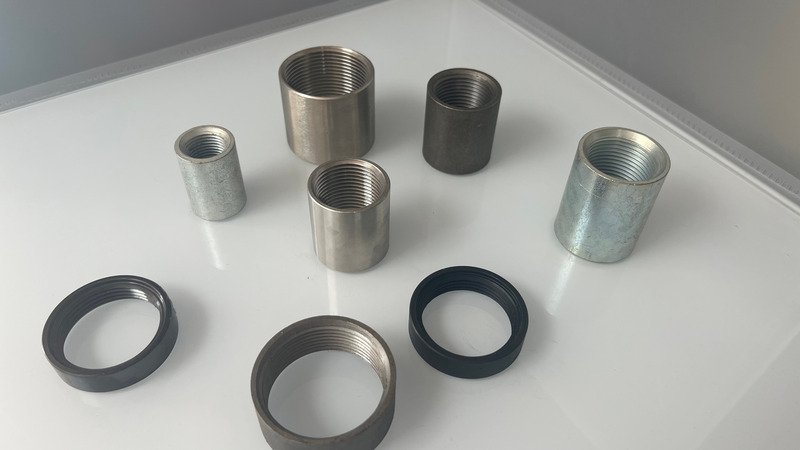
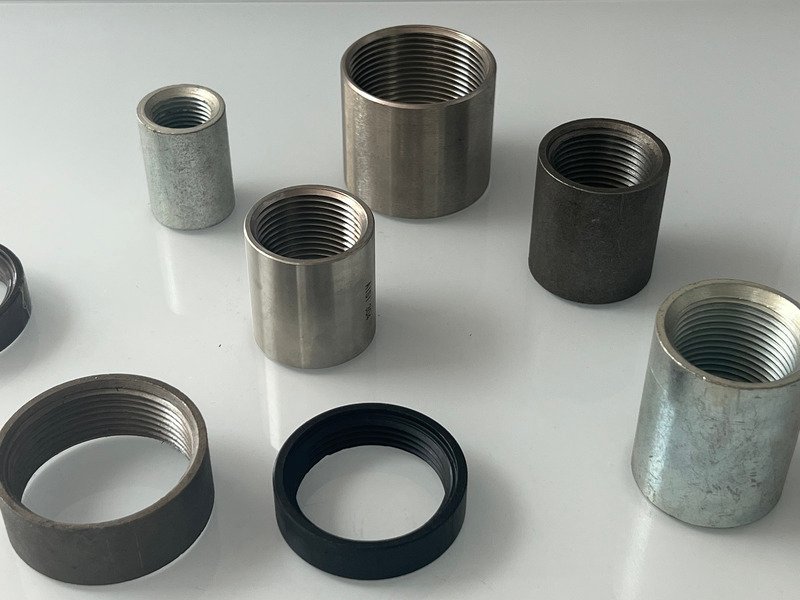
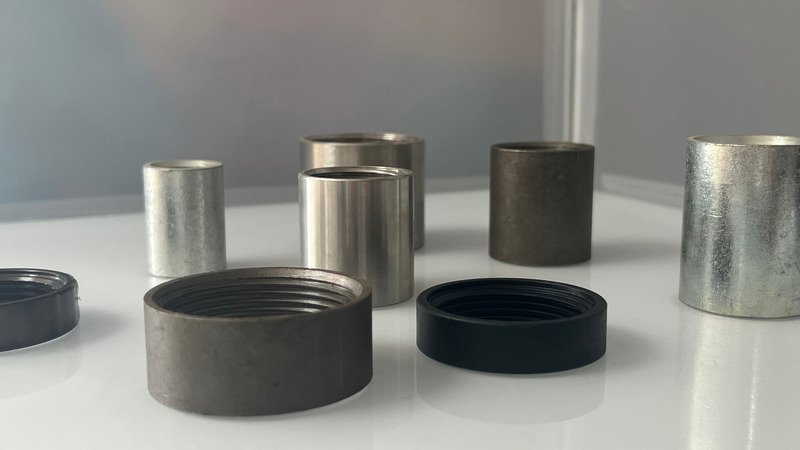
The primary distinction between half coupling and full coupling lies in their length.
The half coupling is shorter than the full coupling, even only half the height of the latter.
Installation
Full coupling connects two pipes directly.
Therefore, installation is simple, fast, and does not require complex fabrication.
Half coupling is typically welded to a main pipe to create a branch connection for valves, instruments, or small pipelines.
As a result, it offers a more permanent connection.
Size and Length
Full coupling longer overall length and typically features full internal threads on both ends.
It supports pipe-to-pipe connections.
Half coupling, on the other hand, is shorter and more compact.
It provides a branch or outlet connection.
Applications
Full coupling is widely used in pipeline extension.
For example, it connects two pipes in water or gas systems.
Additionally, it is common in low to medium-pressure systems.
Half coupling is used for branch connections.
For instance, it creates outlets in tanks or pipelines.
Moreover, it is suitable for high-pressure or permanent setups.
Advantages
Full Coupling
Full coupling offers easy installation. It connects two pipes in a straight line without welding.
Therefore, it reduces labor time and cost.
It also allows quick disassembly and replacement when pipeline repair is required.
As a result, maintenance becomes simpler.
Half Coupling
Half coupling provides strong welded support.
Thus, it ensures high structural integrity and reduces leak resistance under pressure. It is ideal for high-pressure and high-temperature applications.
Additionally, it saves space in compact systems.
It is ideal for customized outlet designs.
Which One to Choose
You should choose full coupling for straight pipe connections where two pipes need to be joined in-line.
It works best when flexibility and ease of assembly are required.
On the other hand, use a half coupling for branch outlets or when adding connections to an existing pipe or vessel.
Use it especially when welding is acceptable.
Furthermore, always consider pressure rating, wall thickness, and overall piping system design when selecting the coupling type.
A proper selection improves safety and efficiency.
Conclusion
In summary, half-coupling vs. full-coupling depends on the use case.
Full coupling suits pipe extension.
Meanwhile, half coupling fits branch connections.
As a manufacturer, we recommend evaluating key factors such as:
- System pressure and temperature
- Pipe size and wall thickness
- Installation method (threaded vs. welded)
- Maintenance and accessibility requirements
Careful selection based on these parameters ensures optimal performance, reliable sealing, and long service life of your piping system.
This ensures optimal performance and long service life.
FAQ
What is the major difference between half coupling and full coupling?
Full coupling connects two pipes.
However, a half coupling creates a branch connection.
Are full couplings reusable?
Yes, full coupling can be removed and reused.
Therefore, it is suitable for flexible systems.
Why use a half coupling instead of a full coupling?
Half-coupling is welded to a surface.
Thus, it provides a stronger and permanent outlet.
What are common types of coupling?
Common types of coupling include full coupling, half coupling, and reducing coupling.
Each type serves a specific piping function.