
In industrial piping systems, threaded connections remain one of the most practical and widely used methods for joining pipes and fittings.
Among them, the NPT coupling is a key component for securely and efficiently connecting pipes.
As a manufacturer of pipe nipples, pipe couplings, and steel pipes, we often receive questions such as: Is the NPT thread tapered? And what is a tapered thread?
In this guide, we explain the structure, sizes, materials, and standards behind pipe coupling products.
This helps engineers and procurement teams make the right selection for their projects.
Types
We manufacture several types of pipe couplings to meet different installation needs:
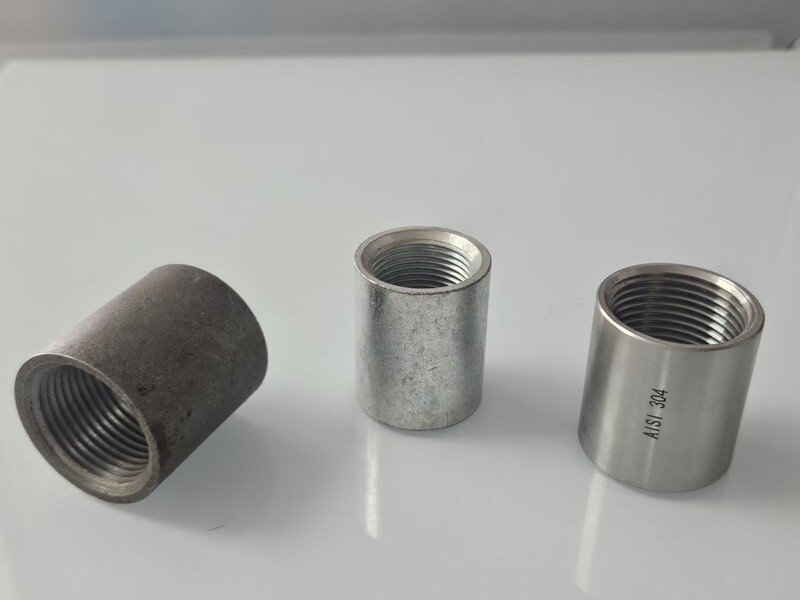
1. Full Coupling
A full coupling connects two pipes or pipe nipples.
It has internal threads on both ends.
This is the most common pipe coupling used in pipelines.
2. Half Coupling
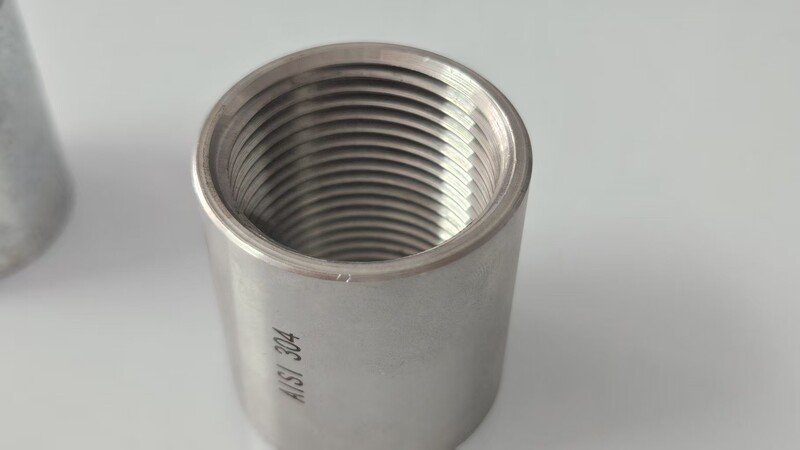
A half coupling is shorter than a full coupling.
It is often welded onto a pipe or tank.
It allows a threaded outlet connection.
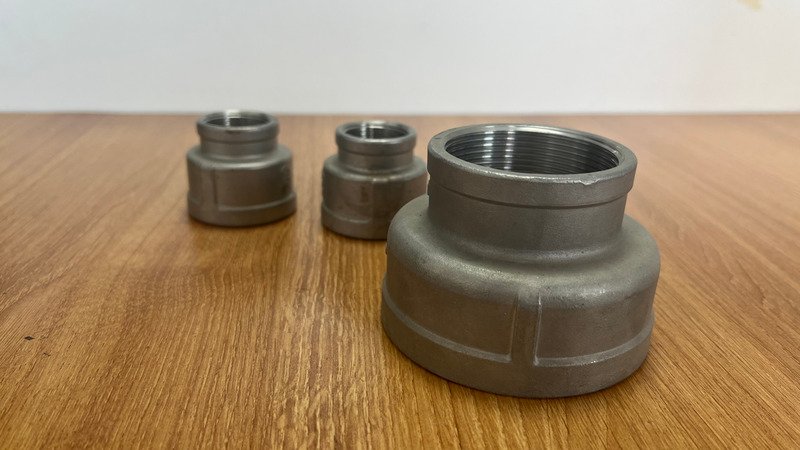
3. Reducing Coupling
A reducing coupling connects pipes of different sizes.
It has different internal diameters on each end.
This is useful when adapting pipeline layouts.
Each type is designed with precision-machined internal threads to ensure proper sealing and alignment.
Sizes & Specifications
NPT pipe couplings follow standardized dimensions.
We typically produce sizes ranging from 1/8 inch to 4 inches.
Key dimensional features include:
- Thread size (NPT): Matches pipe or nipple size
- Length: Varies based on full or half coupling design
- Thread engagement length: Critical for sealing performance
- Wall thickness: Ensures pressure resistance
We manufacture according to strict tolerances to ensure compatibility with pipe nipples and steel pipes.
For special projects, we also provide custom sizes and non-standard lengths.
Thread Standards
A common question is: What is a tapered thread?
A tapered thread is a thread that gradually decreases in diameter along its length.
This design allows the threads to tighten as they are engaged.
So, is the NPT thread tapered?
Yes. NPT stands for National Pipe Tapered thread.
The tapered pipe thread design creates a mechanical seal when tightened.
Sealants such as PTFE tape or thread compound are still recommended.
We manufacture products based on the ANSI NPT thread standard.
This ensures:
- Interchangeability with global piping systems
- Reliable sealing performance
- Consistent thread geometry
The taper angle is typically 1 in 16.
This means the diameter changes gradually along the thread length.
This design is why NPT pipe coupling connections are widely used in oil, gas, and water systems.
Material Options
We offer a wide range of materials to meet different operating conditions:
1. Carbon Steel
- Strong and cost-effective
- Suitable for general industrial use
2. Stainless Steel (304 / 316)
- Excellent corrosion resistance
- Ideal for chemical and marine environments
3. Galvanized Steel
- Zinc-coated for corrosion protection
- Common in water systems
Material selection depends on:
- Fluid type
- Temperature
- Pressure requirements
- Environmental conditions
As a manufacturer, we ensure material traceability and compliance with international standards.
Applications
NPT couplings are used in many industries:
- Oil and Gas Pipelines
- Water Supply Systems
- Fire Protection Systems
- Chemical Processing Plants
- HVAC and Mechanical Systems
They are commonly used with:
- Pipe nipples
- Steel pipes
- Valves and equipment connections
Thanks to the tapered thread design, these connections are easy to install and maintain.
FAQ
1. Is the NPT thread tapered?
Yes. NPT threads are tapered. This allows the threads to seal tightly when tightened.
2. What is a tapered thread?
A tapered thread gradually changes diameter. This creates a sealing effect during assembly.
3. Do NPT couplings require sealant?
Yes. We recommend using PTFE tape or thread sealant to ensure leak-free connections.