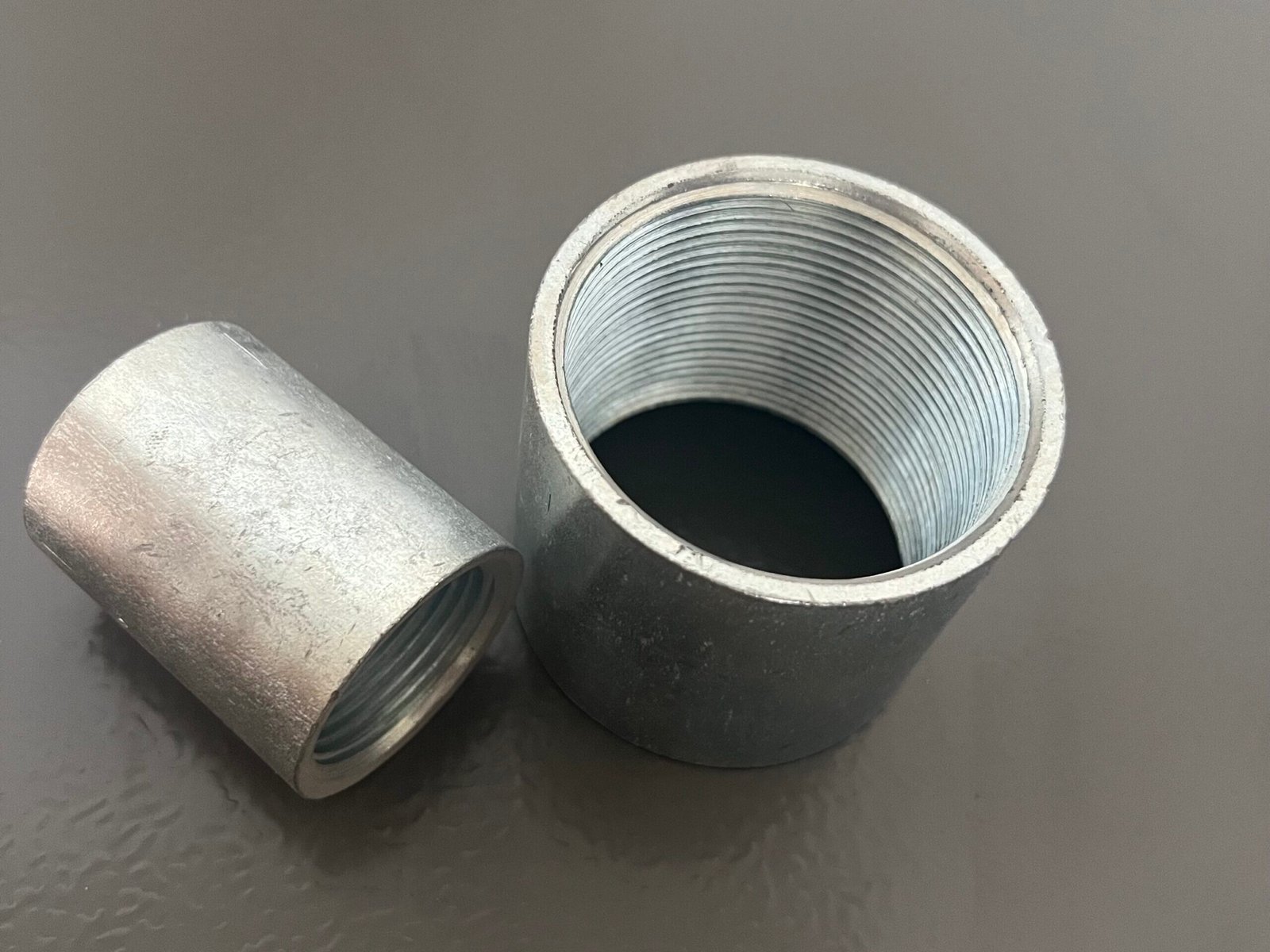
Galvanized pipe couplings provide corrosion protection and long-term service in any wet environment.
This guide includes the galvanizing process, proper installation, and maintenance tips.
What is a Galvanized Pipe Coupling?
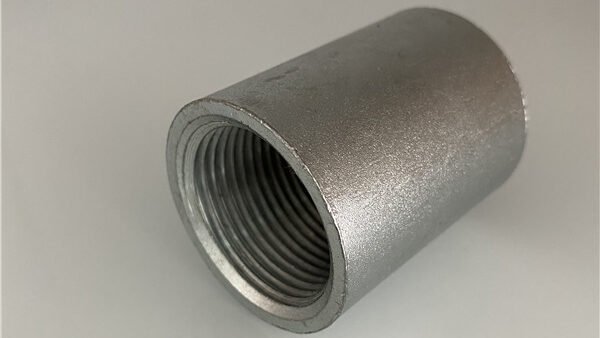
A cylinder-shaped female threaded fitting coated with a zinc protective layer.
This zinc coating is anti-rust and corrosion-resistant even in outdoor and wet applications.
Electro vs Hot-Dip Galvanizing
Electro galvanized, also known as cold galvanizing.
Electro galvanized applies a zinc coating through an electrochemical process.
Electro galvanized pipe coupling has smooth finishes, more precise threads, and lower costs.
For many indoor and industrial applications, electro-galvanized pipe fittings are practical and efficient.
Our electro galvanized pipe couplings have stable quality, fast delivery, and are cheap.
Material Specifications
The galvanized pipe coupling is also made of carbon steel, the same as black steel couplings.
Thus, the galvanized pipe coupling also meets ASTM A106 and ASTM A53 standards.
How Galvanizing Protects Steel
Barrier Protection
The zinc coating creates a physical barrier:
- Prevents moisture from reaching the steel
- Blocks oxygen and contaminants
- Impermeable protective layer
Effectiveness:
- 100× better than unprotected steel
- 5-10× better than painted steel (paint can crack)
Cathodic Protection (Sacrificial Anode)
Zinc is more electrochemically active than steel:
What This Means:
- If the coating is scratched or damaged
- Zinc corrodes preferentially (sacrifices itself)
- Protects exposed steel even when damaged
- Prevents rust on scratches and edges
Comparison:
- Galvanized: Zinc corrodes instead of steel
- Painted steel: Rust spreads under paint from scratches
- Stainless steel: Passive layer repairs but can fail in chlorides
Self-Healing Properties
Zinc corrosion products (white rust) are protective:
- Zinc oxide and zinc carbonate form on the surface
- These compounds seal minor damage
- Provide additional barrier protection
- “Weathering” creates a more durable surface
Galvanized vs Black Steel Couplings
| Feature | Galvanized | Black Steel |
| Base material | Carbon steel A53/A106 | Carbon steel A53/A106 |
| Coating | Hot-dip zinc | Phosphate-coated or Sandblasted |
| Appearance | Silvery-gray | Dark gray/black |
| Corrosion resistance | Excellent | Poor |
| Outdoor use | Ideal | Not recommended |
| Wet environments | Excellent | Corrodes rapidly |
| Coastal areas | Good | Fails quickly |
| Service life (outdoor) | 30-50 years | 1-5 years |
| Cost | +15-20% vs black | Baseline |
| Weight | Slightly heavier | Standard |
| Strength | Same | Same |
| Temperature limit | 200°C (392°F)* | 427°C (800°F) |
| Weldability | Poor (coating burns off) | Excellent |
| Potable water | Approved | Not approved |
Types of Galvanized Couplings
Full Coupling
Description:
- Female threads on both ends
- Same size threads (standard coupling)
- Fully galvanized inside and out
Sizes Available:
- 1/8″ to 12″ (all common sizes)
- NPT, BSP, DIN threads
Reducing Coupling
Description:
- Two different sizes end
- Transitions between pipe sizes
Common Combinations:
- 1″ × 3/4″
- 1″ × 1/2″
- 3/4″ × 1/2″
- 1-1/4″ × 1″
- 1-1/2″ × 1″
- 2″ × 1-1/2″
- 2″ × 1″
Advantage over Bushings:
- More compact
- Single fitting vs two-piece bushing
- Better flow characteristics
Half Coupling
Description:
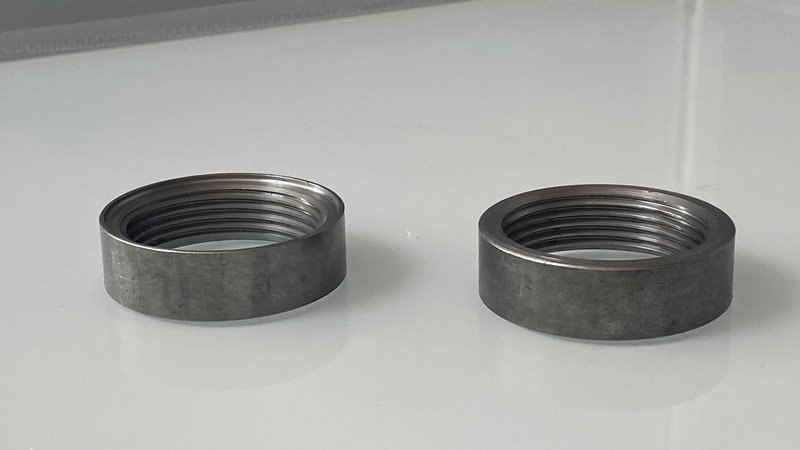
- Female thread on one end
- Socket weld or plain bore on the other end
- Used for branch connections
Types:
- Threaded-only half coupling
- Socket weld half coupling (galvanized after welding)
Note: Socket weld half couplings are galvanized after welding for complete protection.
Applications – Where Galvanized Excels
✓ Outdoor Piping Systems
Ideal Applications:
Irrigation Systems:
- Agricultural irrigation
- Landscape sprinklers
- Drip irrigation manifolds
- Exposed water distribution
Why galvanized:
- Constant exposure to water
- UV radiation
- Temperature cycling
- Soil moisture
Fire Sprinkler Systems (Wet Pipe):
- Building fire protection
- Water-filled pipes
- Code-required (NFPA 13)
- 50-year service life expected
Why galvanized:
- Prevents internal rust
- Reduces maintenance
- Meets code requirements
- Protects water quality
Outdoor Plumbing:
- Building exteriors
- Pump stations
- Outdoor fixtures
- Hose bibs
Why galvanized:
- Rain exposure
- Freeze-thaw cycles
- UV exposure
- Long service life needed
✓ Wet and Humid Environments
Swimming Pool Equipment:
- Filter connections
- Pump plumbing
- Chemical feed lines (if compatible)
- Equipment rooms (high humidity)
Why galvanized:
- High humidity
- Chlorine exposure (moderate)
- Wet surfaces
- Corrosive atmosphere
Note: For saltwater pools or heavy chlorine, use 316 stainless steel
Cooling Towers:
- Make-up water lines
- Drain connections
- Overflow piping
Why galvanized:
- Humid atmosphere
- Water spray
- Chemical additives (mild)
Car Wash Systems:
- Water supply piping
- Equipment connections
- Boom and spray bar plumbing
Why galvanized:
- Constant water exposure
- Soaps and detergents
- High humidity
✓ Potable Water Systems
Municipal Water:
- Distribution piping
- Service connections
- Fire hydrant branches
Why galvanized:
- Approved for drinking water
- Long service life
- Corrosion protection
- Cost-effective
Building Water Supply:
- Residential plumbing
- Commercial buildings
- Schools and hospitals
Why galvanized:
- Code-approved for potable water
- Interior rust protection
- Exterior durability
✓ Fence and Structural Applications
Chain Link Fence:
- Top rail connections
- Gate hinges and hardware
- Post attachments
Why galvanized:
- Outdoor exposure
- Matches galvanized pipe and fittings
- 30+ year lifespan
Handrails and Guardrails:
- Outdoor railings
- Industrial walkways
- Stair railings
Why galvanized:
- Structural strength
- Weather resistance
- Low maintenance
Scaffold and Temporary Structures:
- Frame connections
- Joint couplings
Why galvanized:
- Reusable for decades
- Outdoor storage
- Rough handling resistant
✓ Agricultural Applications
Barn and Stable Piping:
- Watering systems
- Cleaning stations
- Feed mixing equipment
Why galvanized:
- High humidity
- Animal waste (corrosive)
- Frequent washdowns
Greenhouse Systems:
- Irrigation distribution
- Misting systems
- Structure supports
Why galvanized:
- Extreme humidity
- UV exposure through glass
- Chemical fertilizers
✓ Industrial Outdoor Installations
Compressed Air (Outdoor Runs):
- Yard air distribution
- Between buildings
- Outdoor equipment supply
Why galvanized:
- Outdoor exposure
- Condensation protection
- Long service life
Process Cooling Water:
- Cooling tower supply/return
- Outdoor heat exchangers
- Equipment cooling
Why galvanized:
- Outdoor piping
- Wet surfaces (condensation)
- Chemical additives compatible
When NOT to Use Galvanized Couplings
❌ High-Temperature Applications
Problem:
- Zinc melts at 419°C (786°F)
- Coating degrades above 200°C (392°F)
- Toxic zinc oxide fumes at high temps
Not suitable for:
- Steam above 200°C (392°F)
- High-temperature process piping
- Thermal oil systems
- Furnace piping
Use instead:
- Black steel (for dry, high-temp)
- Stainless steel (for wet, high-temp)
❌ Welding Applications
Problem:
- Zinc coating burns off during welding
- Creates toxic zinc oxide fumes
- Weld area loses corrosion protection
- Brittle weld zones
Not suitable for:
- Socket weld fittings (unless re-galvanized)
- Field welding modifications
- Custom fabrications requiring welding
Alternatives:
- Use threaded connections only
- Galvanize AFTER welding (factory process)
- Use stainless steel for welded systems
Safety: Never weld galvanized fittings without proper ventilation. Zinc oxide fumes cause “metal fume fever.”
❌ High-Chloride Environments
Problem:
- Zinc corrodes faster in high chlorides
- Salt spray accelerates zinc depletion
- Coastal marine environments harsh
Marginal for:
- Immediate coastal areas (< 1 mile from ocean)
- Saltwater splash zones
- Marine industrial facilities
Better alternatives:
- 316 stainless steel (best)
- Heavy-duty galvanizing with epoxy topcoat
- Duplex systems (galvanized + painted)
However:
- Galvanized still far better than black steel
- Acceptable in mild coastal areas (> 1 mile inland)
- Regular maintenance extends life
❌ Strong Acid or Alkali
Problem:
- Acids dissolve zinc coating
- Strong alkalis attack zinc
- Coating failure leads to base steel corrosion
Not suitable for:
- Sulfuric acid > 5%
- Hydrochloric acid
- Nitric acid
- Sodium hydroxide (concentrated)
- Ammonia (anhydrous)
Use instead:
- Stainless steel 316
- Specialized alloys (Hastelloy, Inconel)
- Plastic (CPVC, PP, PVDF)
❌ Underground Burial (Sometimes)
Problem:
- Soil chemistry varies widely
- Some soils accelerate zinc corrosion
- Cathodic protection systems can damage coating
Concerns:
- Acidic soils (pH < 5.5)
- Highly alkaline soils (pH > 12.5)
- High chloride or sulfate content
- Anaerobic (oxygen-depleted) soils
Solutions:
- Soil resistivity testing
- Protective wrapping or coating
- Cathodic protection design coordination
- Consider HDPE or PVC for burial
Installation Best Practices
Pre-Installation Considerations
- Coating Inspection:
Before installation, inspect zinc coating for:
✓ Uniform coverage
- No bare spots or thin areas
- Even color (gray to silver)
- Spangled pattern acceptable
✓ Thread quality
- Threads clean and free of excess zinc
- Smooth threading action
- No zinc buildup preventing engagement
✓ Damage check
- No chips or gouges in coating
- Edges and corners well-coated
- Shipping damage repaired
White rust (powdery white deposit):
- Normal zinc corrosion product
- Protective, not harmful
- Can be brushed off
- Indicates active protection
- Thread Sealant Selection:
For Potable Water:
- PTFE tape (white, standard)
- NSF-certified pipe dope
- Never use lead-based compounds
For Irrigation/Non-Potable:
- Standard PTFE tape
- Pipe dope (any standard formula)
- Anaerobic sealant
For Gas (if galvanized approved for gas in your area):
- Yellow PTFE tape (gas-rated)
- Gas-approved pipe dope
- Follow local codes strictly
Important: Don’t use excessive sealant on galvanized coating; sealant only seals threads.
Installation Steps
Step 1: Thread Preparation
Unlike black steel, galvanized threads need gentler treatment:
- Clean threads with wire brush (soft, not steel)
- Remove any shipping debris
- Don’t damage zinc coating
- Clean out thread valleys
- Check for zinc buildup
- Threads should engage smoothly by hand
- If binding, remove excess zinc carefully
- Don’t use steel tools that gouge coating
- Apply thread sealant
- PTFE tape: 3-4 wraps clockwise
- Pipe dope: Thin, even coating
- Less is more with galvanized
Step 2: Hand-Thread First Pipe
- Start male thread into coupling by hand
- Should thread easily without force
- Thread until hand-tight
- Verify straight engagement (not cross-threaded)
Note: Galvanized threads may feel slightly rougher than black steel—this is normal.
Step 3: Align and Thread Second Pipe
- Position second pipe at correct orientation
- Hand-thread into opposite end
- Verify alignment before wrench-tightening
Step 4: Wrench-Tighten
Two-Wrench Method:
- Wrench on coupling hex flats
- Second wrench on pipe
- Hold coupling, turn pipe
- Tighten 2-3 turns past hand-tight
⚠️ Important for Galvanized:
- Don’t overtighten—can crack coating
- Use adjustable wrenches or strap wrenches when possible
- Avoid pipe wrenches on visible coating if cosmetic appearance matters
- Torque guidelines same as black steel, but go gently
Coating Protection:
- Jaw marks on hex flats = acceptable (hidden)
- Deep gouges on visible surface = avoid if possible
- Minor scratches self-heal via cathodic protection
Step 5: Post-Installation Inspection
✓ Visual check for:
- Proper alignment
- No gaps at coupling shoulders
- No visible leaks
✓ Coating check:
- No major damage to zinc coating
- Scratches are acceptable (will self-protect)
- Touch up major damage if needed
✓ Pressure test:
- Test at 1.5× operating pressure
- Hold for required duration
- Monitor for leaks
Coating Touch-Up (If Needed)
For major damage during installation:
Cold Galvanizing Spray:
- Zinc-rich spray paint (95%+ zinc)
- Clean damaged area first
- Apply 2-3 light coats
- Allow drying between coats
Zinc-Rich Paint:
- Brush-on zinc paint
- For scratches and gouges
- Not as effective as hot-dip but better than nothing
Maintenance and Service Life
Expected Service Life
Outdoor Exposure (varies by climate):
| Environment | Galvanized Life | Black Steel Life |
| Rural inland | 50+ years | 5-10 years |
| Urban industrial | 30-40 years | 3-5 years |
| Suburban | 40-50 years | 5-8 years |
| Coastal (> 5 miles) | 25-35 years | 2-5 years |
| Coastal (< 1 mile) | 15-25 years | 1-3 years |
| Marine splash zone | 10-15 years | < 1 year |
Indoor Humid:
- Galvanized: 50+ years
- Black steel: 10-20 years
Buried (depends on soil):
- Galvanized: 20-50 years
- Black steel: 5-15 years
Factors Affecting Lifespan
Climate:
- Dry climates = longer life
- Humid climates = moderate life
- Wet climates = shorter life (but still far better than black steel)
Pollution:
- Industrial pollution (SO₂) accelerates zinc corrosion
- Clean air = maximum life
Chlorides:
- Road salt exposure reduces life
- Coastal salt spray = significant factor
- De-icing salt runoff = corrosive
Temperature Cycling:
- Freeze-thaw cycles stress coating
- Expansion/contraction can cause minor cracking
- Generally not a major factor
UV Exposure:
- Minimal effect on zinc coating
- Unlike paint, zinc doesn’t degrade from UV
Maintenance Requirements
Inspection Schedule:
First Year:
- Initial inspection: After installation
- 6 months: Check for any installation damage
- 12 months: Baseline condition documentation
Years 2-10:
- Annual inspection
- Check for white rust (normal)
- Look for any coating loss
Years 10+:
- Annual or bi-annual inspection
- Monitor coating thickness if possible
- Plan for eventual replacement based on condition
What to Inspect:
✓ Zinc coating condition
- White rust = normal, protective
- Red rust = zinc depleted, action needed
- Uniform gray color = good condition
✓ Mechanical integrity
- No leaks
- Threads still tight
- No physical damage
✓ Connection points
- Thread engagement still proper
- No weeping or seepage
- Sealant intact
When to Replace:
❌ Red rust appearing
- Indicates zinc depletion
- Base steel now exposed
- Replace before failure
❌ Leaks developing
- Thread corrosion
- Coupling failure
- Replace immediately
❌ Structural damage
- Impact damage
- Excessive corrosion
- Coating loss > 50%
Extending Service Life
Paint Topcoat (Duplex System):
- Apply compatible paint over galvanizing
- Adds 1.5-2× to service life
- Ideal for harsh coastal environments
Regular Cleaning:
- Remove dirt and debris accumulation
- Prevents localized corrosion
- Especially important in industrial areas
Avoid Dissimilar Metals:
- Copper directly against galvanized = galvanic corrosion
- Use dielectric unions
- Separate with plastic washers
Galvanized vs Stainless Steel
Cost Comparison
| Material | Relative Cost | Best For |
| Galvanized | Baseline (1.0×) | General outdoor, wet environments |
| 304 Stainless | 2.0-2.5× | Food/pharma, indoor corrosive |
| 316 Stainless | 2.5-3.0× | Marine, chemicals, extreme corrosion |
Decision Matrix
Choose Galvanized When:
✓ Budget is an important factor
✓ General outdoor exposure
✓ Potable water (where approved)
✓ Fire sprinkler systems
✓ Irrigation and agriculture
✓ Fence and structural
✓ Temperature < 200°C
✓ Mild to moderate corrosion
Choose Stainless Steel When:
✓ Budget allows premium material
✓ Severe coastal environment (< 1 mile from ocean)
✓ Chemical exposure
✓ Food/pharmaceutical applications
✓ High aesthetic requirements
✓ Very long life required (100+ years)
✓ High temperature (> 200°C)
Quality Standards and Testing
Galvanizing Standards
ASTM A53:
- Standard Specification for Zinc Coating (Hot-Dip) on Iron and Steel Hardware
- Minimum coating thickness requirements
- Coating weight specifications
- Most common standard in North America
Testing Methods
Coating Thickness:
Magnetic Gauge Method:
- Non-destructive
- Measures coating thickness
- Accurate to ±5 microns
- Quick field test
Weigh-Strip-Weigh Method:
- Destructive test
- Most accurate
- Used for certification
- Laboratory procedure
Coating Adhesion:
Bend Test:
- Fitting bent to specified radius
- Coating should not flake or crack
- Indicates metallurgical bond quality
Impact Test:
- Drop weight on coated surface
- Coating should not spall off
- Tests bond strength
Coating Uniformity:
Visual Inspection:
- 100% surface inspection
- Check for bare spots
- Verify uniform color
- Document any defects
SANVO Quality Assurance for Galvanized Couplings
✓ Hot-Dip Galvanizing per ASTM 53
- Minimum 86 microns coating thickness
- Verified by magnetic gauge testing
- Batch testing with certification
✓ Base Material Certification
- ASTM A106 carbon steel
- Mill test certificates (MTC)
- Chemical and mechanical test results
✓ Dimensional Inspection
- Thread gauges (go/no-go)
- Caliper measurements
- ASME B16.11 compliance
✓ Thread Quality After Galvanizing
- Threads tapped after galvanizing (preferred method)
- Or threads chased/cleaned after galvanizing
- Smooth threading verified
✓ Documentation Provided
- Galvanizing certificate
- Coating thickness test results
- Material certificates
- Compliance statements
✓ Third-Party Inspection
- SGS, TUV, BV accepted
- Witness testing available
- Independent verification
Pricing and Ordering
Price Comparison
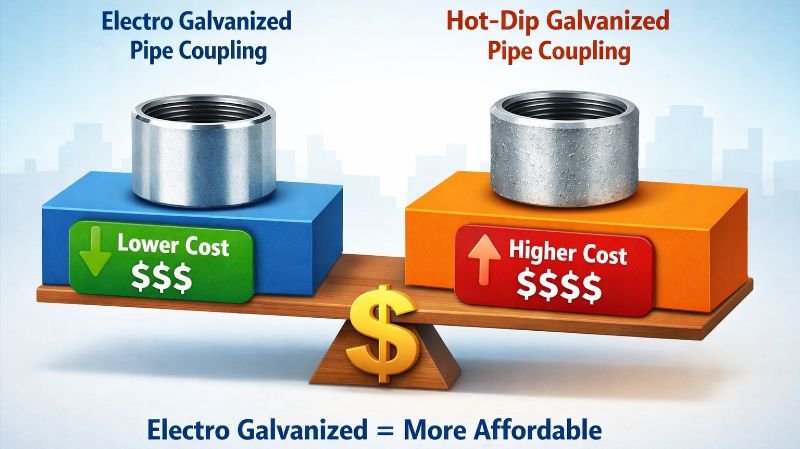
Electro galvanized pipe couplings are cheaper than hot-dip galvanized because their process is simpler, requires less material, and has lower production energy consumption.
This results in a lower unit price while still providing enough corrosion protection.
Thus, electro galvanized pipe couplings are often the preferred choice for projects.
Factors Affecting Price:
- Zinc prices (commodity fluctuation)
- Coating thickness (heavier coating = more expensive)
- Order quantity (volume discounts)
- Market conditions
Order from Us
Minimum Order Quantity:
- Standard: 50 pieces per size
- Can mix sizes to meet 50-piece total
- Custom sizes: Higher MOQ (100-200 pcs)
Lead Time:
- Standard sizes: 10-14 days
- Large quantities: 15-20 days
- Custom specifications: 20-30 days
What to Specify:
- Size: Nominal pipe size (e.g., “3/4 inch”)
- Type: Full, reducing (specify both sizes), or half coupling
- Thread: NPT, BSP, or DIN
- Pressure Class: 2000#, 3000#, or 6000# (if applicable)
- Quantity: Total pieces required
- Coating Standard: ASTM A153 (standard) or specify if different
- Certification: If a galvanizing certificate or MTC is required
Why Buy Galvanized Couplings from SANVO
Quality Galvanizing
✓ Hot-Dip Process (Not Spray or Electroplate)
- True metallurgical bond
- Multi-layer protection
- Self-healing properties
- Exceeds ASTM A153 minimums
✓ Typical Coating: 85-125 microns
- Exceeds minimum requirement of 86 microns
- Thicker coating = longer life
- Consistent batch-to-batch
✓ Post-Galvanizing Thread Treatment
- Threads tapped after galvanizing OR
- Threads chased and cleaned after galvanizing
- Ensures zinc protection on threads
Complete Product Range
✓ All Standard Sizes: 1/8″ to 12″
✓ All Thread Types: NPT, BSP, DIN
✓ All Pressure Classes: 2000#, 3000#, 6000#
✓ All Types: Full, reducing, half couplings
Also Available:
- Galvanized pipe nipples (all lengths)
- Black steel couplings (indoor use)
- Stainless steel couplings (304, 316)
- Custom manufacturing
Competitive Advantages
✓ Low MOQ – 50 Pieces
- Accessible for small to medium projects
- Mix sizes to meet minimum
- Flexible ordering
✓ ISO 9001:2015 Certified
- Consistent quality systems
- Documented procedures
- Continuous improvement
✓ Fast Delivery
- Stock items: 10-14 days
- Direct shipping to USA, Canada, Australia
- Reliable logistics
✓ Factory-Direct Pricing
- No distributor markup
- Volume discounts available
- Transparent pricing
✓ Free Samples
- Test quality before ordering
- Verify coating thickness
- Check thread compatibility
✓ Technical Support
- Application guidance
- Material selection assistance
- Installation advice
Frequently Asked Questions
Q: What’s the difference between hot-dip and electroplated galvanizing?
A:
- Hot-dip: Immersion in molten zinc, creates thick coating (85+ microns), metallurgical bond, self-healing
- Electroplate: Thin zinc deposited electrically, typically 5-25 microns, not self-healing
Hot-dip is FAR superior for pipe fittings. SANVO uses hot-dip galvanizing per ASTM A153.
Q: Can I paint over galvanized couplings?
A: Yes, but surface preparation is critical:
- Weather galvanizing for 6-12 months OR etch with phosphoric acid
- Use zinc-compatible primer
- Apply topcoat paint
Painting adds life in harsh environments (duplex system).