
What Is a Pipe Nipple?
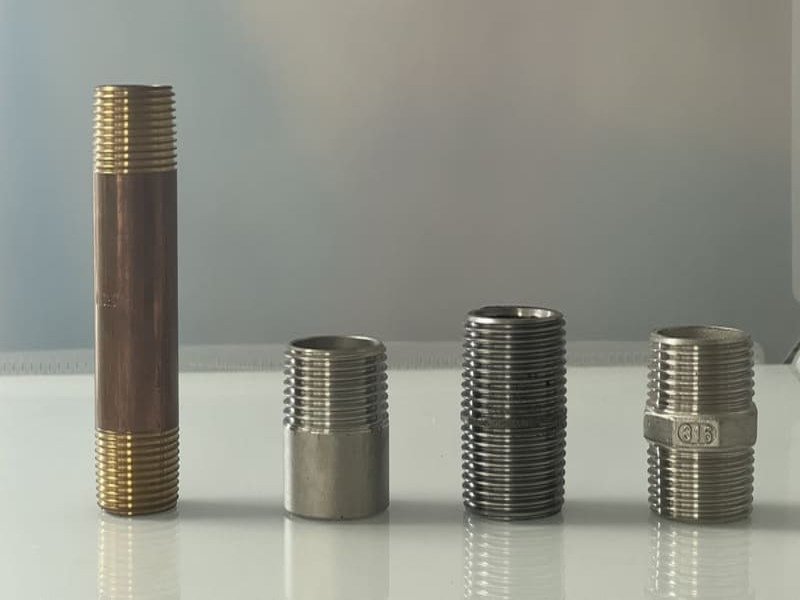
A pipe nipple is a short pipe with male threads on one or both ends.
It is a threaded connector.
Pipe nipples are available in different materials, including stainless steel, carbon steel, galvanized steel, and brass.
Select the most suitable option based on pressure requirements, corrosion resistance, and operating environment.
Pipe Nipple Structure Explained
A typical pipe nipple consists of several important parts:
1. Pipe Body
The pipe body material directly determines the strength and corrosion resistance and provides the main flow channel for liquids or gases.
Common materials include:
- Stainless steel
- Carbon steel
- Galvanized steel
- Brass
Select the most suitable material option based on pressure requirements, corrosion resistance, and operating environment.
2. Threaded Ends
The threaded ends allow the pipe nipple to connect to other threaded pipe fittings.
Common thread types include:
- NPT (National Pipe Thread)
- BSP (British Standard Pipe)
- BSPT (British Standard Pipe Tapered)
Thread accuracy is critical because improper threading can cause leakage or connection failure.
3. Length
Pipe nipple length is an important specification when selecting a product.
The length may refer to:
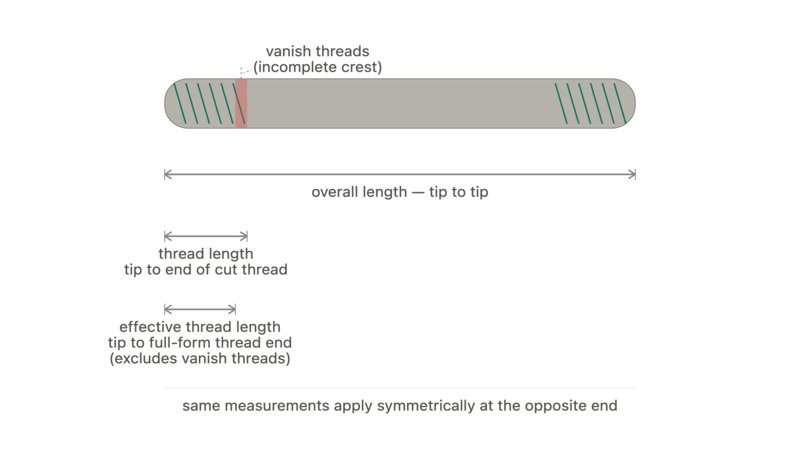
- Overall length
The distance from one end of the pipe nipple to the other end is called the overall length.
- Thread length
Thread length refers to the threaded section at each end of the pipe nipple — measured from the pipe’s end face to where the threading ends and the smooth (unthreaded) body begins.
- Effective length
Effective length is the part of the thread that is fully formed and ready to engage. It doesn’t include the last few incomplete threads near the shoulder.
Because of this, effective length is always a bit shorter than thread length — it’s the number that tells you how much usable thread you actually get.
Different applications require different pipe nipple lengths depending on installation space and connection requirements.
Common Types of Pipe Nipples
Pipe nipples are available in several designs. Today, we introduce the most common types, but there are more types of pipe nipples.
To get a complete list, please go here.
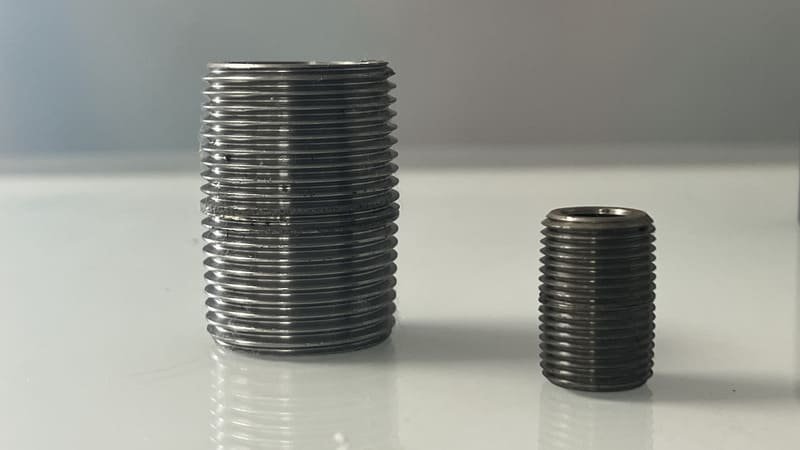
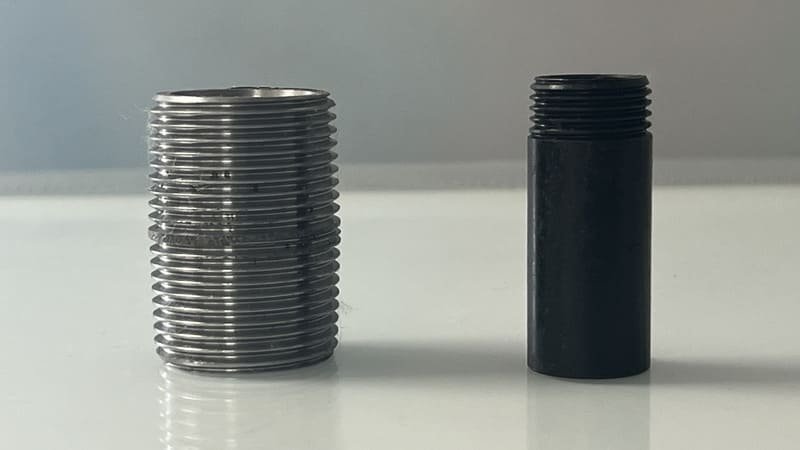
1. Close Pipe Nipple
A close pipe nipple has threads along the entire length of the pipe with hardly any unthreaded section in the center.
It is compact and provides maximum thread engagement for limited installation space.
It is suitable for small piping systems and tight installation areas.
2. Barrel Nipple
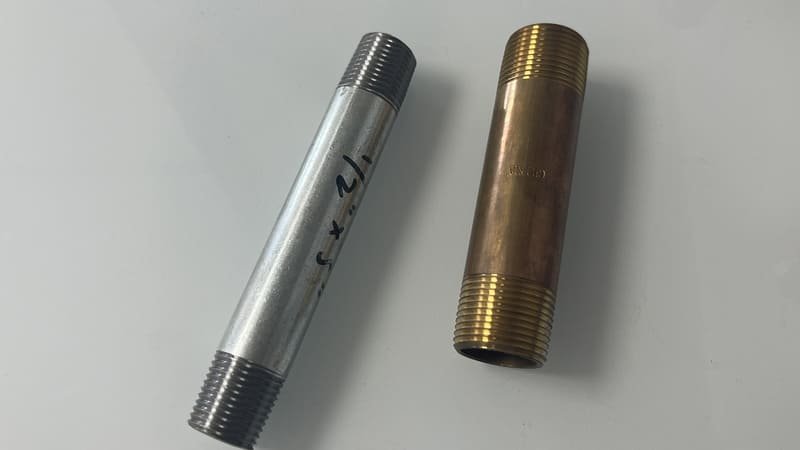
A barrel nipple has threaded ends with an unthreaded section in the middle.
It has a stronger center section, can be easier to install, and is available in many lengths.
It is usually used in industrial piping and water systems for general-purpose connections.
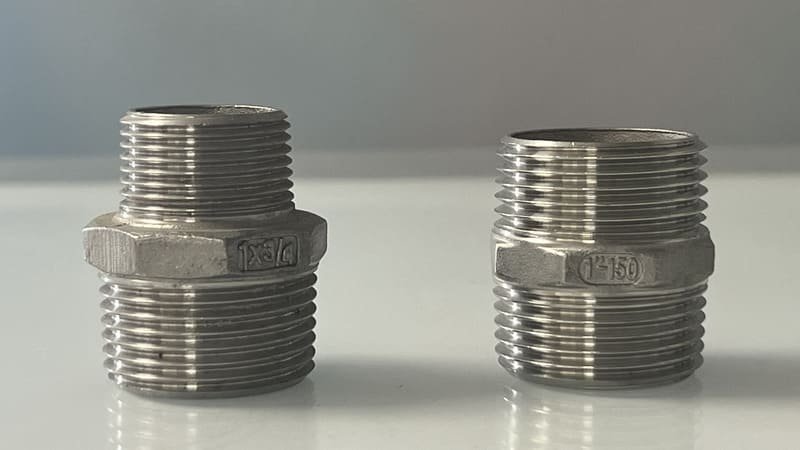
3. Hex Nipple
A hex nipple includes a hexagonal section in the middle, allowing installation with a wrench.
The hex nipple is easy to tighten, offers better installation efficiency, and is suitable for frequent maintenance.
They are used in hydraulic systems, industrial equipment, and mechanical piping.
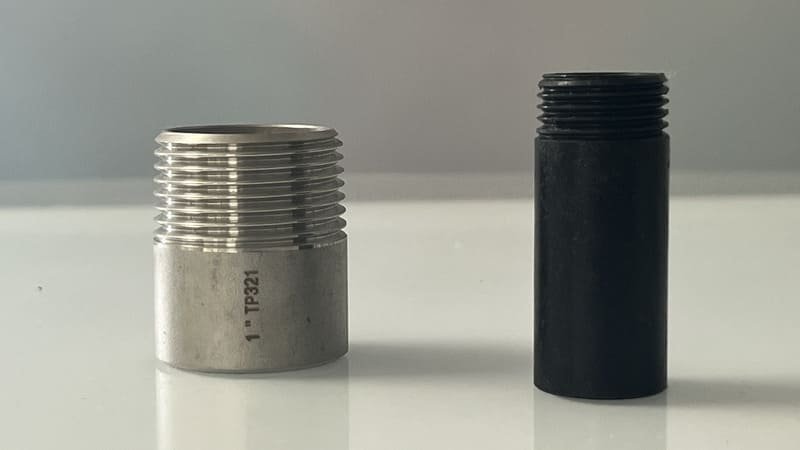
4. Weld Nipple
A weld nipple is designed for welding and threaded connections.
The weld nipple has a high-strength connection and is suitable for high-pressure applications.
They are suitable for Oil and gas systems, Chemical processing, and heavy industrial applications.
Pipe Nipple Materials
Choosing the correct material is one of the most important factors when purchasing pipe nipples.
Stainless Steel Pipe Nipple
Stainless steel pipe nipples are widely used because of their excellent corrosion resistance.
Common grades:
- SS304
- SS316
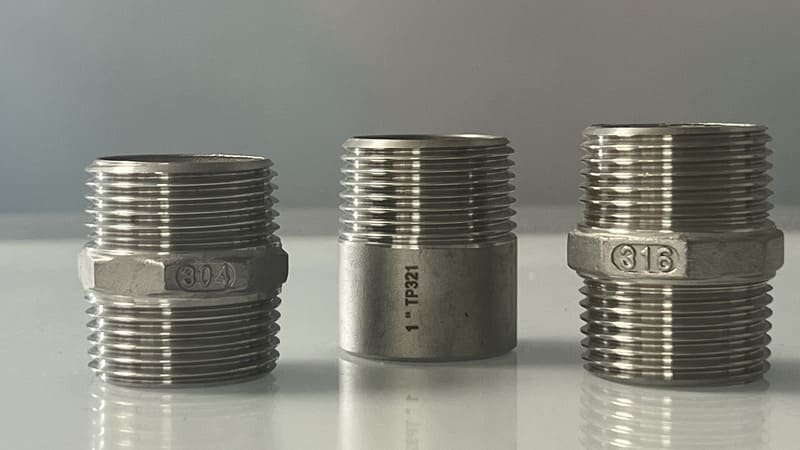
Stainless steel offers excellent corrosion resistance and a long service life, making it suitable for harsh environments.
Applications:
- Food processing
- Chemical industries
- Marine environments
- Water treatment
Carbon Steel Pipe Nipple
Carbon steel pipe nipples are known for their strength and durability.
Their high mechanical strength makes them suitable for high-pressure systems. They are cost-effective too.
Applications:
- Oil and gas
- Industrial pipelines
- Construction systems
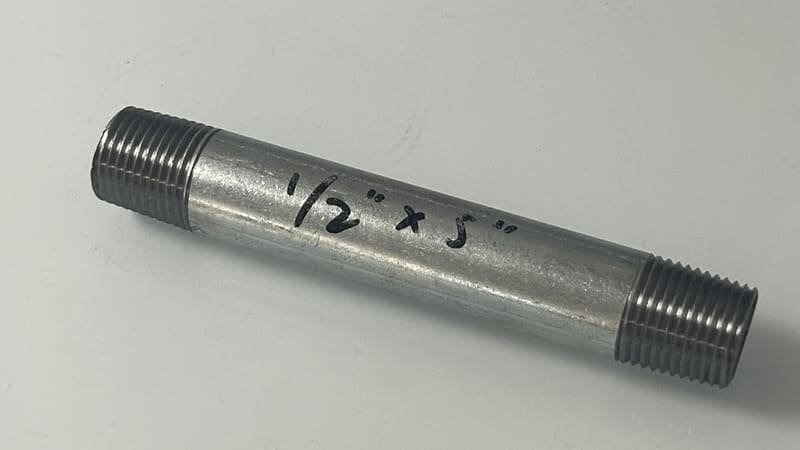
Galvanized Steel Pipe Nipple
Galvanized Steel pipe nipples feature a zinc coating that improves corrosion resistance.
Galvanized pipe nipples offer better outdoor performance, an economical solution, and reduced rust.
Applications:
- Water supply systems
- Fire protection systems
- Building pipelines
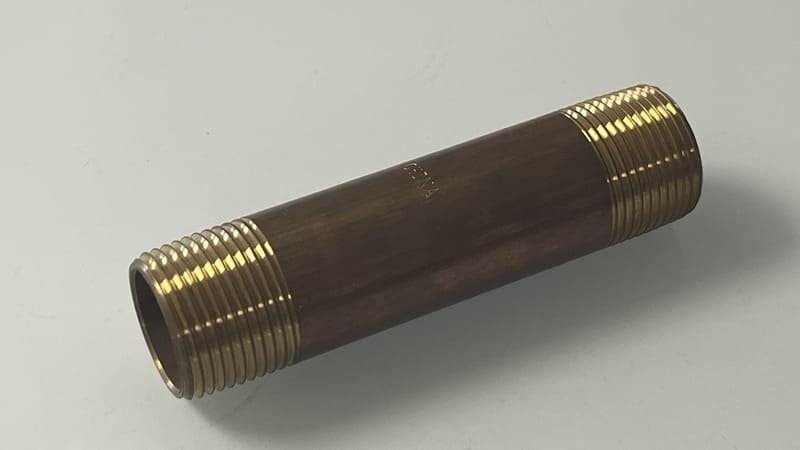
Red Brass Pipe Nipple (ASTM B43)
Red brass pipe nipples are made from Copper Alloy C23000, a copper-zinc alloy specified under ASTM B43.
Red brass offers strong corrosion resistance and is naturally low in lead.
Applications:
- Potable water and plumbing systems
- Boiler feed lines
- Decorative or exposed piping
Common Pipe Nipple Sizes
Pipe nipples are available in various sizes to meet different piping requirements.
Common sizes include:
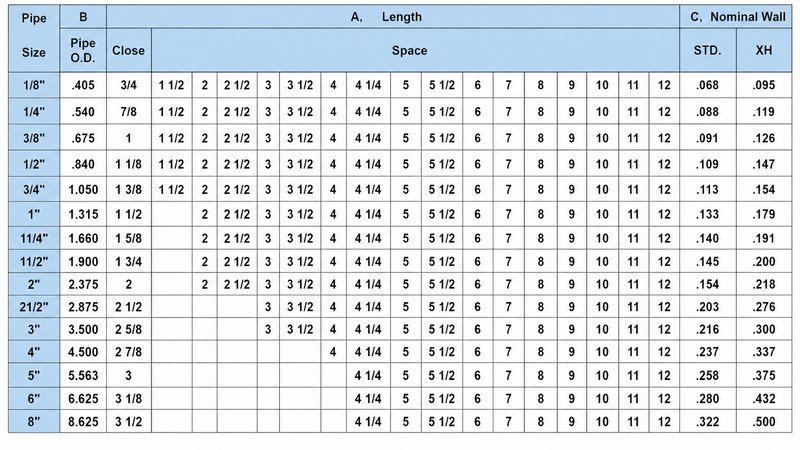
The correct size depends on:
- Flow requirements
- Pressure rating
- Connection type
- Installation space
Pipe Nipple Manufacturing Process
Professional manufacturers usually follow several production steps:
- Raw pipe selection
- Cutting according to required length
- Thread machining
- Surface treatment
- Dimension inspection
- Thread inspection
- Packaging and shipment
Strict quality control ensures reliable connection performance.
Frequently Asked Questions About Pipe Nipples
What is a pipe nipple used for?
Connect other female threaded pipe fittings in a piping system through threaded or welded connections.
What are the most common types of pipe nipples?
The most common types include close nipples, barrel nipples, hex nipples, and weld nipples.
What materials are pipe nipples made from?
Pipe nipples are commonly manufactured from stainless steel, carbon steel, galvanized steel, and brass.
What is the difference between a pipe and a pipe nipple?
A pipe nipple is a short pipe section specifically designed to connect piping components, typically with threaded ends.
Conclusion
Selecting the correct pipe nipple requires careful consideration of:
- Material
- Size
- Thread standard
- Application environment
Do you want to know how to select pipe nipple types for your projects? Look forward to 《Pipe Nipple Buying Guide》.
Want to find a reliable supplier? Contact our team for technical support and customized manufacturing solutions.