
What Is a Dielectric Nipple?
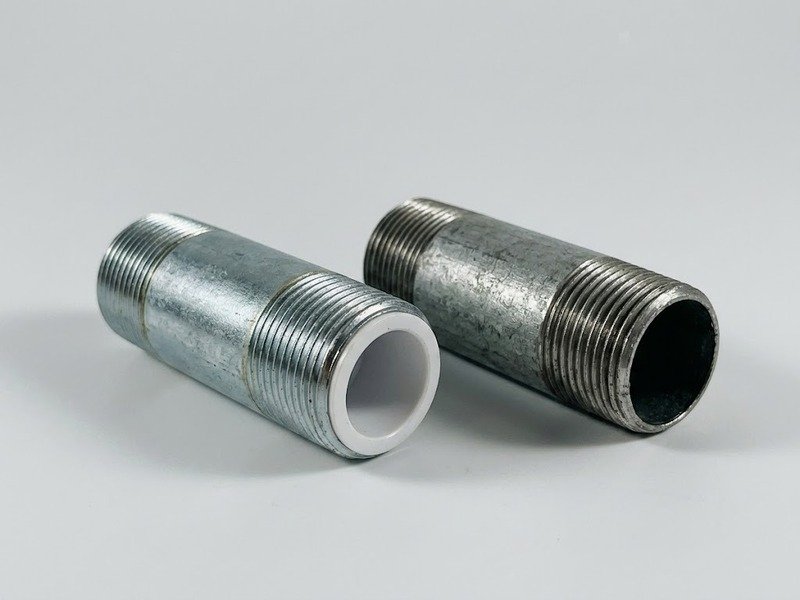
A dielectric nipple is a special type of pipe nipple that provides insulation compared with a steel pipe nipple. It is used to connect different metallic pipes, for example:
- Steel pipe – brass pipe
- Black steel pipe – brass pipe
- Galvanized steel pipe – brass pipe
The core purpose is to prevent different metals from coming into direct contact, which can cause galvanic corrosion.
Difference Between Pipe Nipple and Dielectric Nipple
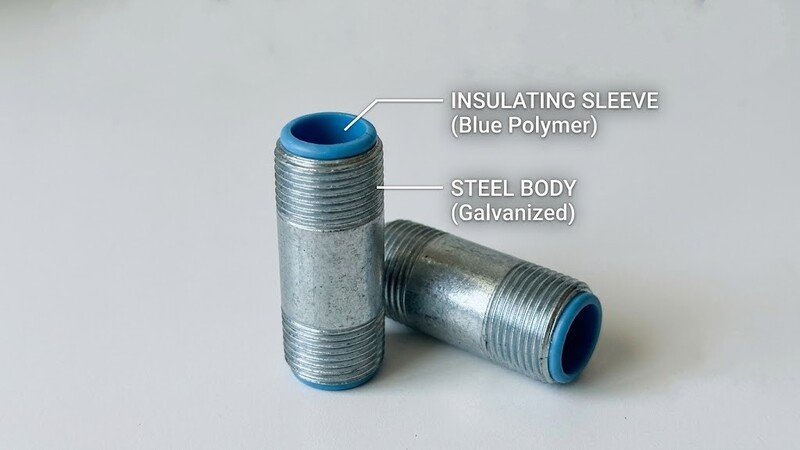
A dielectric nipple provides electrical insulation in addition to the connection function of a standard pipe nipple.
Connecting brass pipes and steel pipes directly can generate galvanic corrosion. Using a dielectric nipple can greatly reduce the risk of corrosion.
Compared with a standard pipe nipple, a dielectric nipple has an additional insulating sleeve. The insulating sleeve blocks the flow of electrical current between the steel pipe and the connected metal pipe at the other end.
Structure
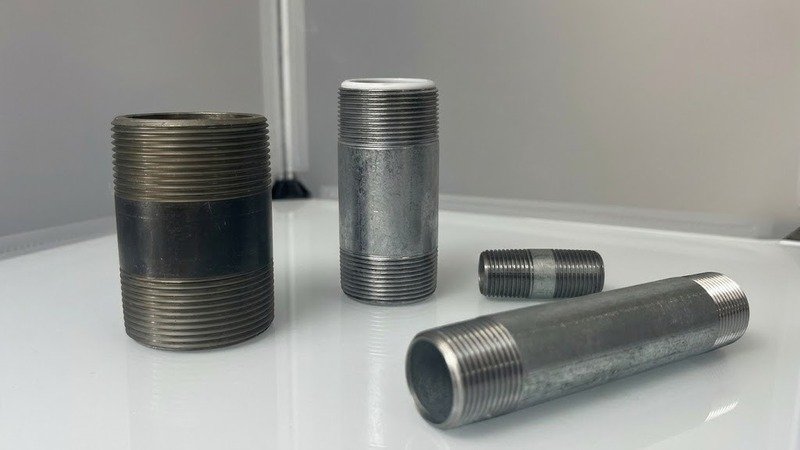
A dielectric nipple mainly consists of a steel body and an internal insulating sleeve.
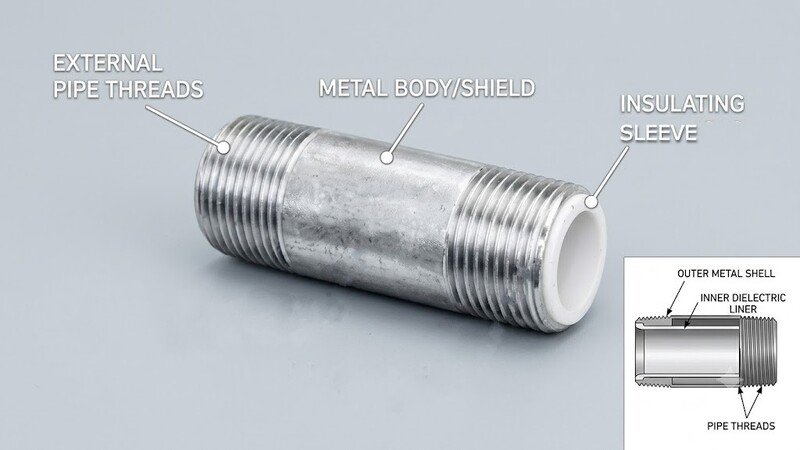
Compared with a standard pipe nipple, the additional insulation components separate the connected metals and prevent direct electrical contact.
The main components include:
| Component | Function |
|---|---|
| Steel body | Provides mechanical connection and pressure resistance |
| Insulating sleeve | Blocks electrical current between different metals |
| Insulating washer (some designs) | Provides additional electrical isolation at connection points |
The steel body provides the mechanical strength of the connection, while the insulating sleeve provides electrical isolation.
How Does a Dielectric Nipple Prevent Galvanic Corrosion?
Galvanic corrosion occurs when two different metals are connected in the presence of an electrolyte, such as water.
For example, when steel pipes and brass pipes are directly connected, the difference in electrical potential between these metals can create an electrochemical reaction, causing corrosion over time.
it prevents this problem by using an insulating sleeve to interrupt the electrical path between the two different metals.
The insulating material separates the metal surfaces, reducing the possibility of galvanic corrosion.
Materials
The main body is usually manufactured from metal materials, while the internal insulating sleeve is made from non-conductive materials.
Common materials include:
| Part | Common Materials |
|---|---|
| Nipple body | Carbon steel, galvanized steel, stainless steel |
| Insulating sleeve | Nylon, PTFE, phenolic material |
The selection of materials depends on the application requirements, including corrosion resistance, temperature conditions, and pressure requirements.
Does the Insulating Sleeve Affect Pipe Nipple Performance?
We can see that the insulating sleeve is slightly longer than the pipe nipple body. This design prevents electrical contact between the two metal ends.
A dielectric nipple does not affect threaded connections because the steel body and threads provide the mechanical connection. The insulating sleeve mainly provides electrical isolation.
When purchasing, users only need to select the suitable overall length according to their installation requirements.
What Are the Differences Between Transporting Media and Standard Steel Pipe Inner Walls?
Unlike standard pipe nipples, the transported medium directly contacts the insulating sleeve when using a dielectric nipple.
Therefore, they are different from standard steel pipe nipples. Steel pipe nipples may experience rust and corrosion because the medium directly contacts the steel surface.
In comparison, dielectric nipples prevent the transported medium from directly contacting the steel body, which can reduce internal corrosion.
The inner diameter is slightly smaller due to the insulating sleeve. For example:
- 1-inch steel pipe nipple ID = 26.6 mm
- 1-inch dielectric nipple ID = 25-26 mm
This may slightly reduce flow capacity and increase pressure loss, but the difference is normally small.
Pressure and Temperature Considerations
The pressure and temperature performance of a dielectric nipple depend not only on the steel body but also on the strength, construction, and temperature range of the insulating sleeve material.
High-temperature steam systems are generally not suitable for standard dielectric nipples because the insulating sleeve may limit the overall temperature and pressure resistance.
For demanding applications, the dielectric nipple design and insulation material should be selected according to the working conditions.
Frequently Asked Questions
Can a dielectric nipple connect steel pipes and brass pipes?
Yes. It is commonly used to connect different metal pipes, such as steel and brass, while reducing the risk of galvanic corrosion.
Does a dielectric nipple completely prevent corrosion?
It helps reduce galvanic corrosion by isolating different metals. However, the actual corrosion resistance also depends on the pipe material, environment, and operating conditions.
Does the insulating sleeve affect flow performance?
The insulating sleeve slightly reduces the internal diameter compared with a standard steel pipe nipple. However, the impact on flow is usually limited in normal applications.
Can dielectric nipples be used in high-temperature systems?
Standard dielectric nipples are generally not recommended for high-temperature applications such as steam systems unless the product is specifically designed for those conditions.