In chemical plants, the circulating cooling water system is one of the most critical utility infrastructures.
These pipelines operate continuously, often exposed to treated water, corrosion inhibitors, varying temperatures, and pressure fluctuations.
For engineering contractors and procurement teams, selecting the right pipe nipple, pipe coupling, and other threaded fittings can significantly impact installation efficiency, maintenance costs, and system reliability.
However, many projects face common challenges:
- corrosion damage after only a few years
- high installation costs due to welding connections
- Difficulty sourcing a certified pipe fittings manufacturer for international projects
This guide explains which pipe fittings work best in chemical plant cooling water systems, how to select materials, and practical ways to reduce installation and lifecycle costs while maintaining engineering standards.
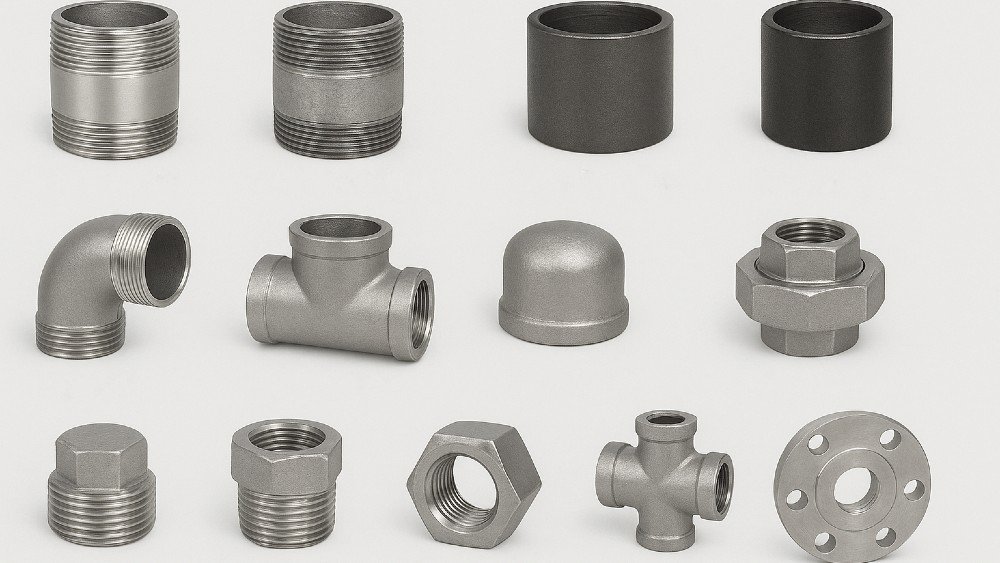
Which Fittings Are Used in Chemical Cooling Water Systems
Cooling water systems in chemical plants usually rely on steel pipes combined with threaded or welded fittings for flexible installation and maintenance.
Below are the most common fittings used in these systems.
| Fitting Type | Application | Key Reason |
|---|---|---|
| Pipe Nipple | Connecting valves and other female pipe fittings | Provides a short threaded extension for equipment connections |
| Pipe Coupling | Joining two pipe nipples or threaded pipes | Fast installation without welding |
| Reducing Coupling | Transition between different pipe sizes | Helps adapt equipment ports and branch lines |
| Elbow (90° / 45°) | Direction change in cooling pipelines | Reduces flow resistance and supports system layout |
| Tee Fitting | Branch connections for equipment or sensors | Allows multiple process connections |
| Union Fitting | Easy disassembly near pumps or filters | Simplifies maintenance and replacement |
In most industrial cooling systems, pipe nipples and pipe couplings are used extensively for:
- valve connections
- pump inlet/outlet assembly
- pressure gauge installations
- maintenance bypass lines
These fittings allow modular installation and reduce the need for on-site welding.
Scale & Quantity Guide for Cooling Water Projects
When planning procurement for a cooling water system, estimating pipe fitting quantities helps control budgets and logistics.
Below is a typical reference for projects of different sizes.
| Project Scale | Pipeline Length | Estimated Pipe Nipples | Estimated Pipe Couplings | Other Fittings |
|---|---|---|---|---|
| Small Plant | 300–500 m | 80–120 pcs | 60–100 pcs | 30 elbows, 10 tees |
| Medium Plant | 800–1500 m | 200–400 pcs | 150–300 pcs | 100 elbows, 40 tees |
| Large Chemical Facility | 2000–5000 m | 800–1500 pcs | 600–1200 pcs | 400 elbows, 150 tees |
How to Reduce Costs Without Compromising Quality
Chemical plant utility systems often operate for decades, so initial fitting selection greatly affects lifecycle costs.
Below are practical strategies used by experienced engineering teams.
1. Replace Some Welded Connections with Threaded Assemblies
Many pump and instrument connections can use:
- pipe nipple + pipe coupling assemblies
Benefits:
- installation time reduced by 20–40%
- easier replacement of components
- less on-site welding
This approach is widely used in cooling water and utility pipelines.
2. Use Galvanized Carbon Steel Instead of Stainless Steel Where Possible
For treated cooling water systems:
- Galvanized carbon steel fittings often provide sufficient corrosion resistance.
Cost comparison:
- stainless steel fittings: 2–3× higher cost
- Galvanized carbon steel: lower material cost with good durability
This substitution is common in Southeast Asia and Middle East plants.
3. Standardize Pipe Fitting Sizes
Many projects unnecessarily specify too many sizes.
Standardizing to:
- 1/2″
- 3/4″
- 1″
- 2″
reduces:
- inventory complexity
- procurement cost
- installation mistakes
Bulk purchasing from wholesale pipe fittings suppliers can reduce price 10–20%.
4. Work with a Direct Pipe Fittings Manufacturer
Buying directly from a manufacturer helps:
- ensure consistent thread precision
- obtain material test certificates
- reduce distributor margins
For large projects, this can lower overall fitting cost by 15–25%.
Material Selection Cheat Sheet
Cooling water conditions vary across plants, especially depending on treatment chemicals and operating temperatures.
Use this quick reference during engineering design.
| Operating Condition | Recommended Material | Not Recommended | Reason |
|---|---|---|---|
| Treated cooling water, <50°C | Galvanized Carbon Steel | Plain carbon steel | Galvanizing improves corrosion resistance |
| High humidity or coastal plants | Stainless Steel 304 | Uncoated carbon steel | A salt environment accelerates corrosion |
| High chloride water | Stainless Steel 316 | Galvanized steel | Better pitting resistance |
| Low-pressure auxiliary lines | Carbon Steel | Plastic fittings | Plastic may deform under heat |
| Pump and instrument connections | Stainless Steel / Galvanized Steel | Cast iron | Thread strength and durability |
This table helps engineers quickly evaluate pipe with fittings material compatibility.
FAQ: Pipe Fittings in Chemical Cooling Systems
Q: What is the most commonly used fitting in cooling water pipelines?
A: The most common fittings are pipe nipples and pipe couplings, used to connect valves, gauges, pumps, and pipeline extensions in threaded systems.
Q: Should cooling water pipelines use stainless steel fittings?
A: Not always. Many systems use galvanized carbon steel pipe fittings, which provide good corrosion resistance at a lower cost than stainless steel.
Q: Are threaded pipe fittings reliable for industrial plants?
A: Yes. For pressures below about 16 bar, threaded fittings such as pipe nipples and couplings are widely used in utility pipelines because they allow faster installation and easier maintenance.
Q: How do I choose a reliable pipe fittings manufacturer?
Look for suppliers that provide:
- material certification (ASTM / EN standards)
- precise thread machining (NPT / BSP)
- consistent batch quality
- export experience in your region
Q: What certifications are typically required for export projects?
Depending on the market:
- EN10204 3.1 material certificates
- ISO 9001 quality management
- pressure equipment compliance for European projects
Conclusion
Selecting the right pipe nipples, pipe couplings, and threaded pipe fittings is essential for building a reliable chemical plant cooling water system.
The correct combination of materials, standardized sizes, and modular pipe with fittings assemblies can significantly reduce installation time, simplify maintenance, and extend service life.
If you are planning a new project or evaluating suppliers:
- Download our industrial pipe fitting selection guide, or
- Contact our engineering team for project-based fitting recommendations and quotations.
Our specialists review technical requirements and respond within 24 hours, helping procurement teams choose the most suitable fittings for their systems.