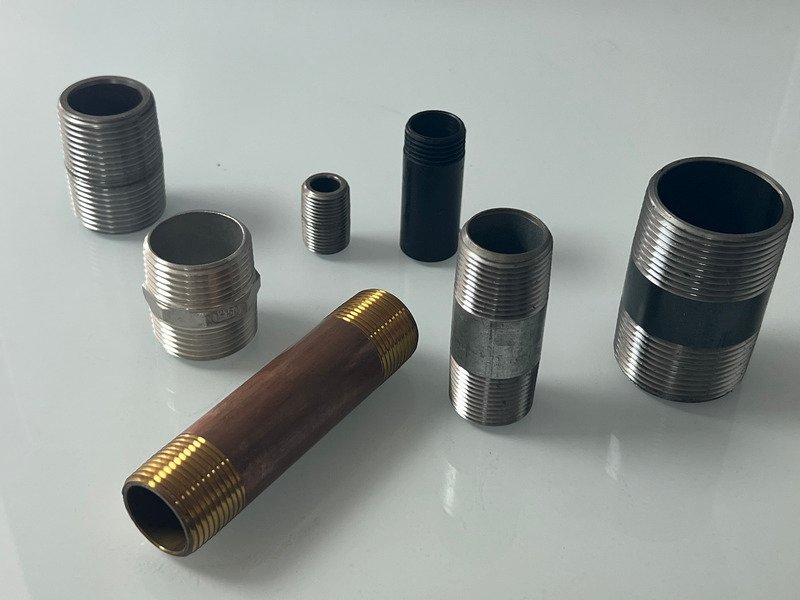
A pipe nipple is a short pipe with male threads on one or both ends, used to connect two female-threaded fittings.
It is made from stainless steel, carbon steel, galvanized steel, and brass. Close, barrel, hex, and weld nipples are available for different situations.
For a full breakdown of types, sizes, and structure, see our complete guide on what a pipe nipple is.
Common Materials of Pipe Nipples
A reliable pipe nipple manufacturer should offer material options and help you trade off the best option for your project.
1. Carbon Steel Pipe Nipple
Carbon steel is one of the most commonly used materials due to:
- High strength
- Good pressure resistance
- Cost-effectiveness
- Wide availability
Common standards include:
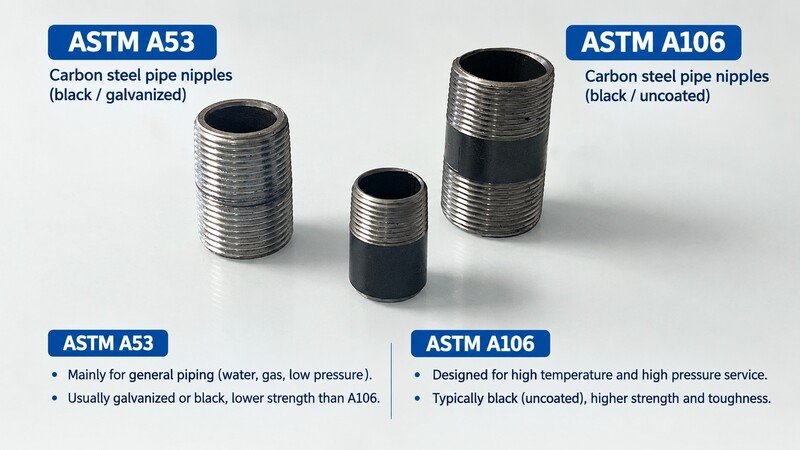
- ASTM A53 – Commonly used for welded and seamless steel pipes.
- ASTM A106 – Specifically for seamless carbon steel pipe used in high-temperature systems.
Carbon steel pipe nipples are used for oil, gas, steam, and water systems.
Although ASTM A53 and ASTM A106 are ASTM standards, they are not interchangeable.
2. Galvanized Steel Pipe Nipple
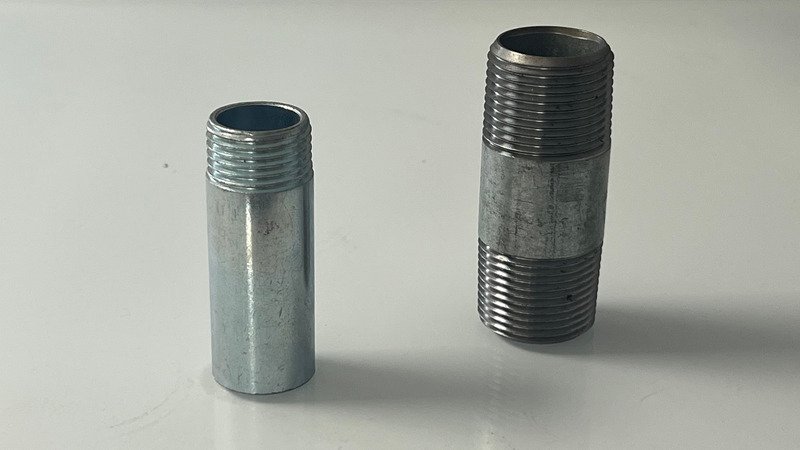
Galvanized steel pipe nipples are made of carbon steel coated with zinc to improve corrosion resistance.
They are ideal for:
- Outdoor applications
- Water supply systems
- Fire sprinkler systems
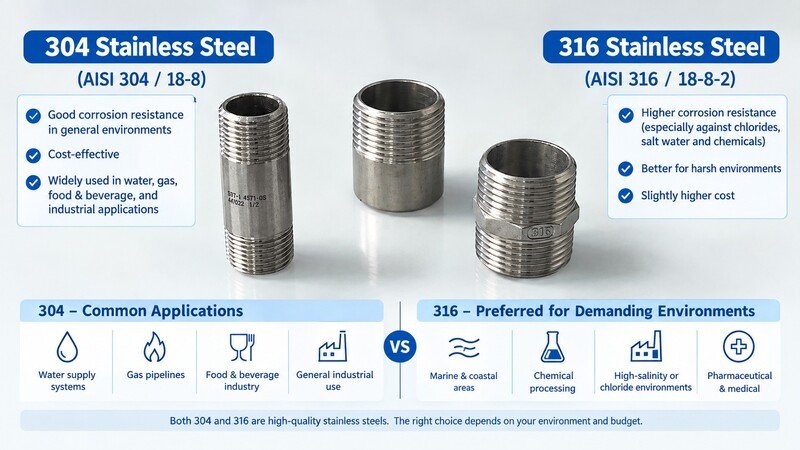
3. Stainless Steel Pipe Nipple
Grades such as 304 and 316 provide excellent corrosion resistance and are widely used in:
- Chemical processing
- Food industry
- Marine environments
316 stainless steel offers stronger anti-corrosion properties than 304 in chloride or saline environments.
304 is cheaper, so it is more cost-effective and has certain corrosion properties. In most cases, 304 stainless steel is enough.
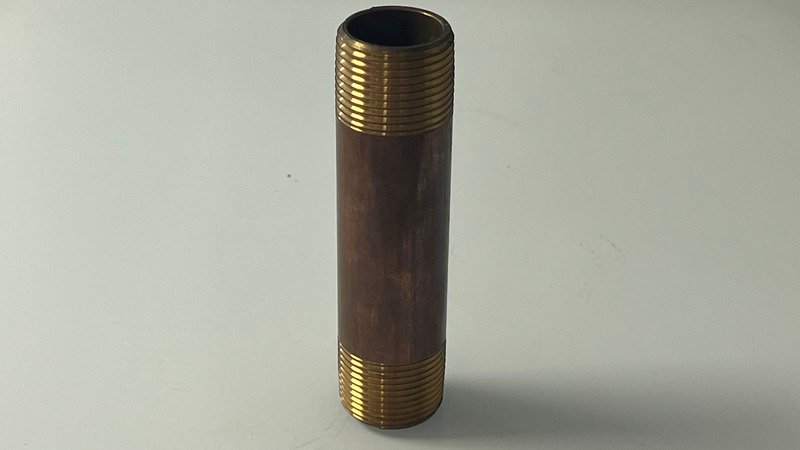
4. Red Brass Pipe Nipple
Manufactured according to ASTM B43, brass nipples are commonly used in:
- Plumbing systems
- Low-pressure water lines
- Decorative piping applications
Pipe Nipple Standards and Specifications
For bulk orders, correct pipe nipple standards and specifications are important.
This information directly determines whether the products match your system.
If you select the wrong spec, you may have to change products and sustain a loss.
Common Manufacturing Standards
- ASTM A53 (Carbon steel pipe)
- ASTM A106 (Seamless carbon steel pipe)
- ASTM B43 (Brass pipe)
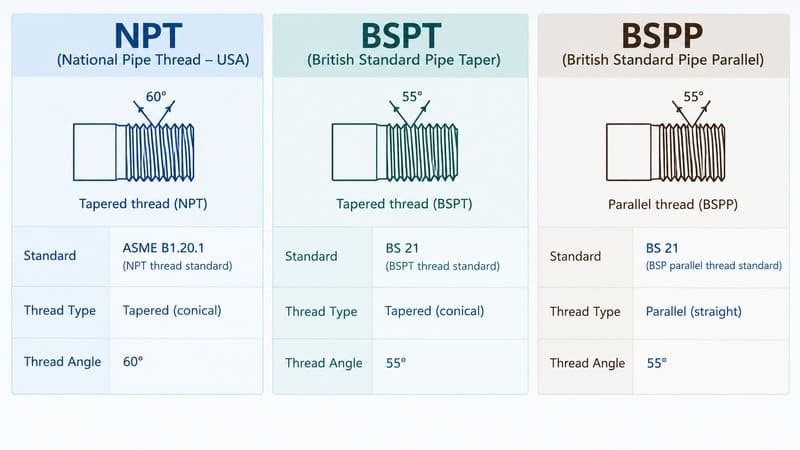
- ASME B1.20.1 (NPT thread standard)
ASTM is commonly applied in North American pipeline systems.
Thread Types
- NPT (National Pipe Thread – USA)
- BSPT (British Standard Pipe Taper)
- BSPP (British Standard Pipe Parallel)
Choosing the correct thread standard ensures compatibility with existing systems.
Choosing the correct thread standard ensures compatibility with existing systems and avoids leaks from mismatched threads.
A pipe nipple manufacturer can produce and verify ASME B1.20.1, rather than nearly NPT, to ensure the manufacturer’s product precision.
Schedule and Pressure Ratings
Pipe nipples are available in different wall thicknesses:
- Sch 40: standard wall thickness, common in general piping.
- Sch 80: extra-heavy wall, for high-pressure systems.
- Sch 160: for high-pressure and high-temperature environments.
A bigger number indicates a thicker pipe wall; a thicker wall indicates greater pressure resistance.
But the schedule number reflects wall thickness; for accurate thickness data, contact us to get the dimension chart.
Industrial Applications of Pipe Nipples
A professional industrial pipe fittings supplier typically serves industries such as:
1. Oil & Gas – pipeline extensions, instrumentation connections, and refinery systems.
2. Fire Protection Systems – Galvanized steel pipe nipples are commonly used in sprinkler systems.
3. HVAC Systems – Used for heating and cooling pipeline connections.
4. Water Treatment Plants – Carbon steel and stainless steel pipe nipples ensure durable water system connections.
5. Construction & Mechanical Engineering – Widely used in equipment installation and machinery assembly.
Pipe Coupling vs Pipe Nipple
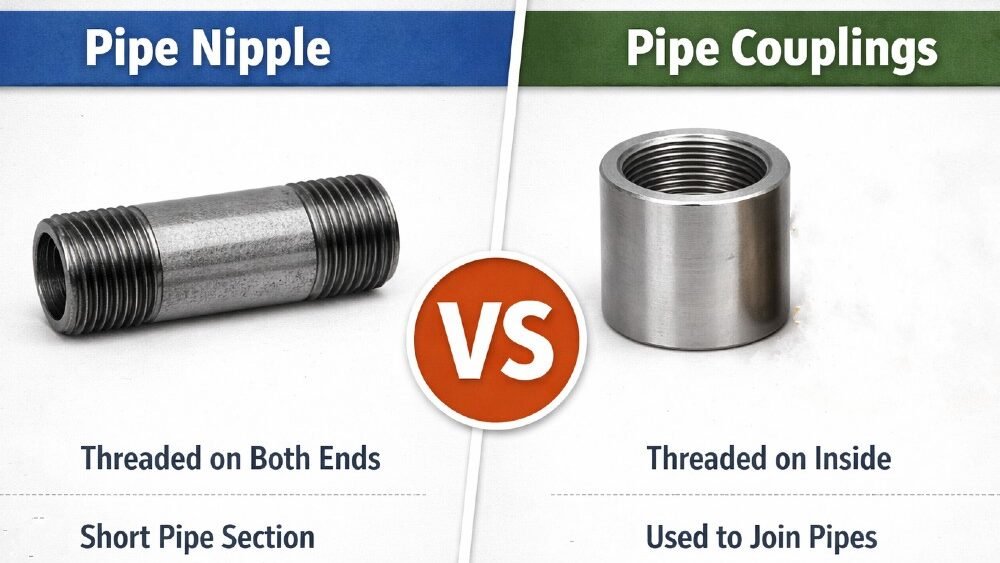
Many buyers confuse pipe nipples and couplings.
- Pipe nipple: Male threads
- Pipe coupling: Female threads
They are often used together to create flexible connection systems.
Custom Pipe Fittings Manufacturing
For many industrial projects, standard sizes may not be sufficient. A professional custom pipe fittings manufacturer should offer:
- Custom length cutting
- Special threading
- Laser marking
- OEM branding
- Special coating (black painting, hot-dip galvanizing)
- Non-standard diameters
Customization capability reflects technical strength.
Quality Control in Pipe Nipple Manufacturing
When evaluating a pipe nipple manufacturer, check whether they conduct:
- Raw material inspection
- Thread gauge inspection
- Hydrostatic pressure testing
- Zinc coating thickness testing
- Dimensional inspection
- Surface finish inspection
Strict quality control ensures reliability in critical industrial systems.
How to Evaluate a Pipe Nipple Manufacturer
Selecting an eligible supplier directly impacts project cost and safety.
Here are 5 key factors to evaluate a pipe nipple manufacturer before purchase:
1. Production Experience
A manufacturer with long production experience better understands international standards, export requirements, and which types suit your projects.
2. Certification
Look for ISO-certified factories and compliance with ASTM standards.
3. Export Capability
We have export experience in North America, Europe, Australia, and the Middle East.
We understand logistics and documentation requirements.
Cooperating with a supplier who understands exporting to your country and the associated customs and documentation requirements is more reliable.
4. Customization Strength
We customize pipe nipples based on requirements, including length, coating, and non-standard threading.
A manufacturer with customization capabilities offers more choice.
5. Stable Supply Chain
We have a stable raw material source that can reduce production time, especially if you need a long-term supplier, not just a temporary trade.
A manufacturer must have stable raw material resources that can directly influence lead time, price, and long-term cooperation.
Consistent raw material sourcing ensures pricing and delivery times.
Customers can contact us for MTC, samples, and a dimension chart before a bulk order, then confirm the types, lead time, and MOQ.
Why Work With a Professional Industrial Pipe Fittings Supplier?
Working with a specialized manufacturer offers several advantages:
- Competitive factory pricing
- Strict quality control
- Bulk production capability
- Short lead time
- Technical support
- Custom manufacturing solutions
Cooperating with an experienced manufacturer reduces risk and supports stable supply.
We are not just a one-off cooperation; our factory-owned production line offers stable quality and pricing, and we take long-term cooperation seriously.
Conclusion
Pipe nipples may be small components, but they are vital in industrial piping systems. From carbon steel pipe nipples to galvanized and stainless steel options, selecting the right material, schedule, and manufacturer is essential for ensuring system reliability.
If you are looking for a trusted pipe nipple manufacturer or threaded pipe nipple supplier, working with an experienced industrial pipe fittings supplier can help ensure quality, competitive pricing, and customized solutions tailored to your project needs.
Contact us today to request a quotation or discuss your custom pipe fittings requirements.