
What Is Pipe Schedule?
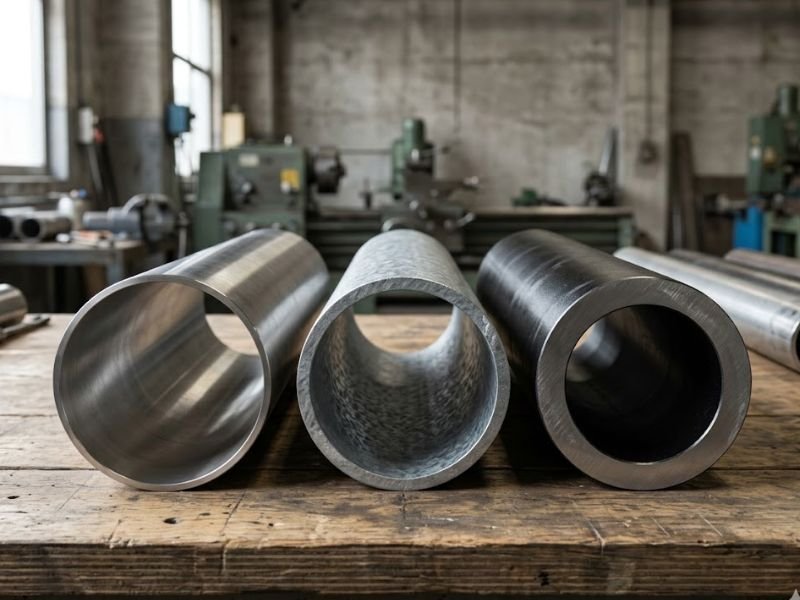
Pipe schedule refers to the wall thickness of a pipe. A higher schedule number means a thicker wall.
Thicker walls allow the pipe to handle higher internal pressure. The outside diameter (OD) stays the same for a given pipe size regardless of schedule.
Only the inside diameter (ID) changes.
The schedule system was developed to standardize pipe wall thicknesses across manufacturers.
Today, common schedules include SCH 10, SCH 20, SCH 40, SCH 80, SCH 120, SCH 160, and XXS (Double Extra Strong).
Schedule 40 Pipe
Schedule 40 is the most commonly used pipe schedule in residential and commercial plumbing.
It offers a good balance between wall thickness and cost. SCH 40 is suitable for low to moderate pressure applications.
It is available in carbon steel, stainless steel, PVC, and other materials.
For example, a 2-inch SCH 40 carbon steel pipe has an OD of 2.375 inches and a wall thickness of 0.154 inches.
t handles pressures up to approximately 1,000 PSI, depending on material and temperature.
Schedule 80 Pipe
Schedule 80 has a thicker wall than Schedule 40. It handles higher pressure and offers greater mechanical strength.
SCH 80 is common in industrial piping, chemical processing, and oil and gas applications.
A 2-inch SCH 80 carbon steel pipe has the same OD of 2.375 inches. However, the wall thickness increases to 0.218 inches.
This reduces the inside diameter and increases pressure capacity significantly.
Schedule 160 Pipe
Schedule 160 is a heavy-duty option designed for very high-pressure systems.
It has a much thicker wall than SCH 40 or SCH 80. SCH 160 is used in refineries, high-pressure steam systems, and hydraulic systems.
It is more expensive and heavier, but essential where safety is critical.
SCH 40 vs SCH 80 vs SCH 160: Comparison
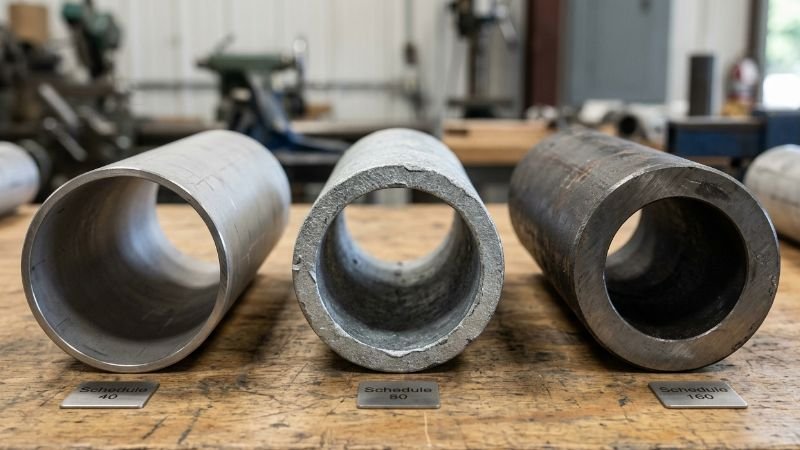
- Wall thickness: SCH 40 < SCH 80 < SCH 160. Each step up increases wall thickness significantly.
- Inside diameter: As the schedule number increases, the inside diameter decreases. This reduces flow volume.
- Pressure rating: Higher schedule pipes handle greater internal pressure. SCH 160 handles roughly twice the pressure of SCH 40.
- Weight: Higher schedule pipes are heavier. SCH 160 can weigh 2–3 times more than SCH 40 in equivalent sizes.
- Cost: SCH 40 is the most affordable. SCH 160 can cost 3–4 times more per foot due to additional material.
- Applications: SCH 40 suits water and gas distribution. SCH 80 is for industrial use. SCH 160 is for extreme-pressure systems.
How to Choose the Right Schedule
Start with your system’s maximum operating pressure. Apply a safety factor of at least 1.5 to determine minimum required pressure rating.
Then consider temperature, fluid type, and corrosion risk. Finally, check applicable standards such as ASME B31.3 for process piping or ASME B31.1 for power piping.
For most water and gas distribution systems, SCH 40 is sufficient. For industrial process lines, SCH 80 is typically recommended.
For high-pressure steam or hydraulic systems, SCH 160 or XXS may be required.
Conclusion
Pipe schedule is a critical factor in safe and efficient piping design.
SCH 40 vs SCH 80 vs SCH 160 represents a trade-off between wall thickness, pressure capacity, weight, and cost.
SANVO manufactures steel pipes in all standard schedules to ASTM, ASME, and API standards.
Request a free sample or get a custom quote from our factory today.