
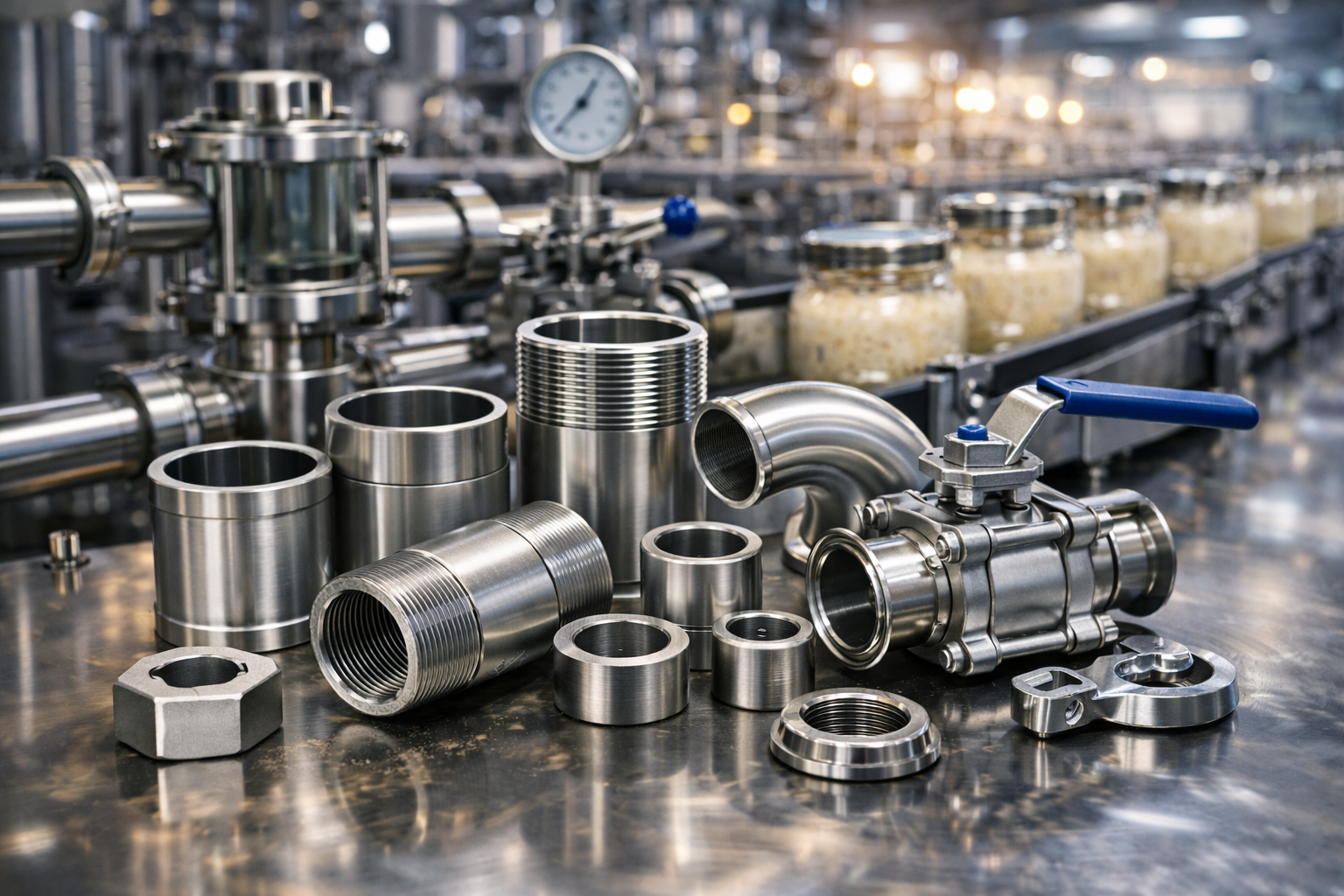
No, it’s not the absolute only option, but it’s the best and most common choice for most food processing setups.
Why Stainless Steel Wins in Almost Every Case
- Excellent corrosion resistance → Handles acids, salts, water, and strong cleaners without rusting or degrading.
- Super hygienic → Smooth surface doesn’t trap bacteria or food particles; easy to clean and sanitize.
- No flavor/odor transfer → Won’t affect the taste or smell of food or beverages.
- Long lifespan → Lasts 10–20+ years with minimal repairs, even in tough conditions like high heat, cold, or pressure.
- Other materials (like plastic or PVC) work in low-pressure, non-critical lines, but they wear faster, crack more easily, sometimes leach chemicals, or require more frequent replacement.
For serious, high-volume food production (dairy, juice, sauces, meat, etc.), stainless steel is practically the standard because it keeps food safe and reduces long-term headaches.
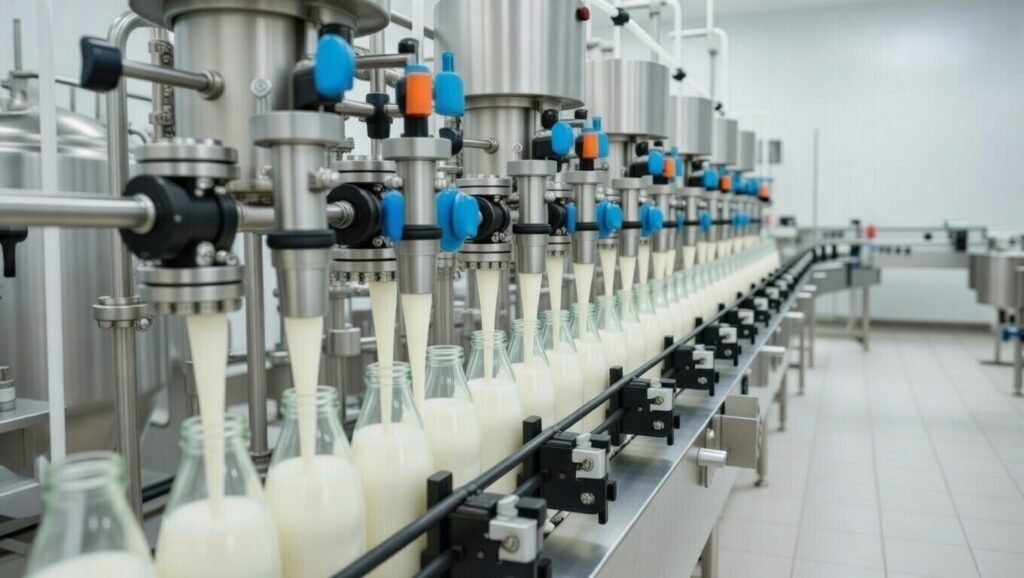
What Pipe Fittings Are Used in?
Example scenario: A dairy plant (milk pasteurization, cooling, and bottling lines)
Common fittings in this kind of pipeline system:
- Elbows (90° or 45°) — Change direction of flow
- Tees — Split or combine lines
- Reducers — Connect pipes of different sizes
- Valves (ball valves, butterfly valves) — Control or stop flow
- Unions — Quick-connect for easy disassembly and cleaning
- Flanges — For secure, removable connections
Materials used:
Mostly 304 stainless steel → Good all-around choice, affordable, great for milk and general food.
316 or 316L stainless steel → Better for lines with cleaners containing chlorine/salts or salty products (adds extra corrosion protection).
These fittings are smooth, crevice-free, and fully weldable or clamp-style, keeping everything sanitary.
Can You Save Costs?
Yes, stainless steel usually saves money over time.
Why it saves:
- 20–50% lower total cost of ownership → Less repairs, replacements, downtime, and contamination losses.
- Faster cleaning = less labor and water/chemical use.
- Longer life = fewer full system overhauls.