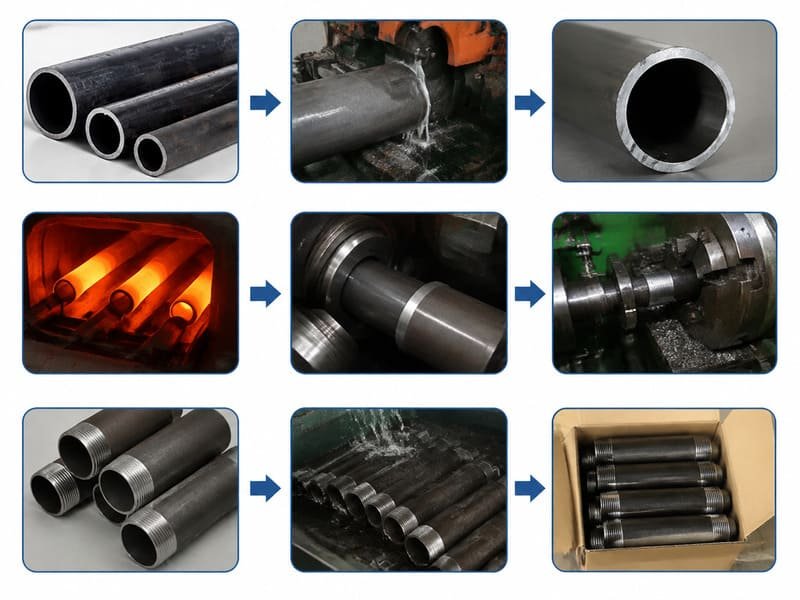
Pipe nipples are classified as welded or seamless based on the raw material used. With our pipe nipple production experience, we select pipes based on application requirements. However, the processing steps are not much different. The biggest differences are raw material selection and the final step — quality inspection.
In actual production, selecting steel pipes is the first and most important step. Different applications require different pipe materials, standards, and manufacturing methods.
For welded nipples, the final inspection checks the quality of the weld seam and threads. For seamless nipples, inspection focuses on material, wall thickness, and thread quality.
Step 1: Raw Material Selection
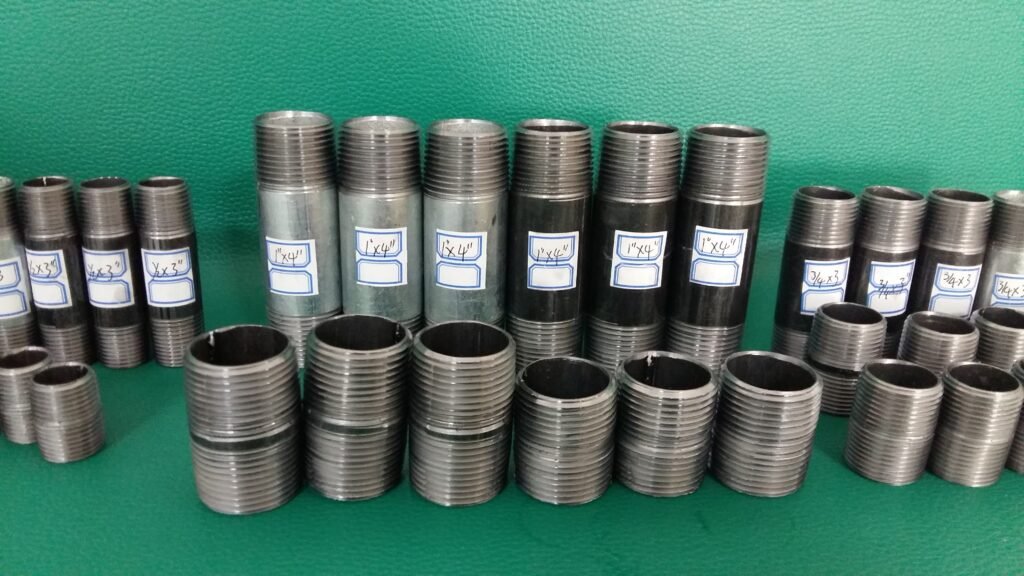
Steel pipes are used as the raw materials for pipe nipples. Only pipes that meet the required standards can be manufactured into pipe nipples. Steel pipes are usually checked for material grade, OD, wall thickness, and surface.
Taking American standards as an example:
Carbon steel pipe nipple standards include: ASTM A53, ASTM A106, and API 5L.
Stainless steel pipe nipple standards include: ASTM A312.
Step 2: Pipe Cutting
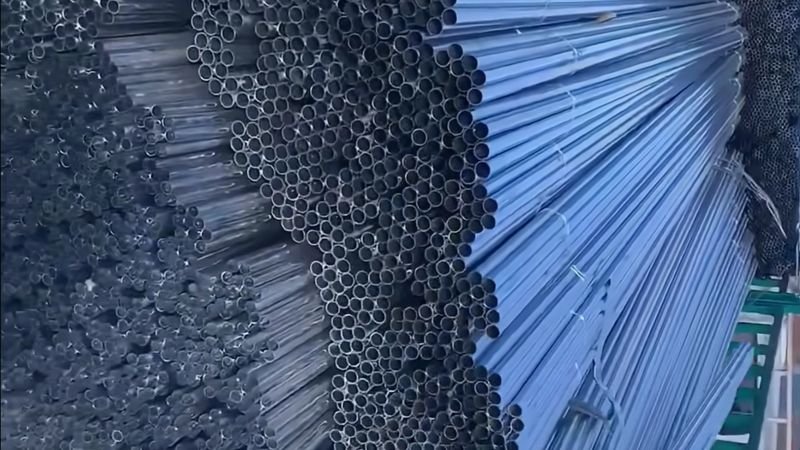
Usually, steel pipes are cut to produce pipe nipples with different industrial sizes. The common length of raw steel pipes is 6m to 12m, while pipe nipples usually range from 1cm to 250cm in length. Therefore, steel pipes need to be cut into required lengths. One steel pipe can be cut into multiple pipe nipples.
Step 3: Facing & Deburring
Steel pipes may have burrs or uneven edges after cutting. Correcting them ensures thread quality, safe installation, and smooth flow.
Proper facing and deburring ensure accurate threading, prevent thread damage during installation, and reduce the risk of leakage caused by poor connections.
Step 4: Chamfering
The outer side of the pipe opening is chamfered to facilitate threading and protect the thread entry. The common angle is between 30 and 45 degrees.
Step 5: Threading
Threading is a core step in manufacturing pipe nipples. North American threaded standards include NPT thread and ASME B1.20.1.
The European market can choose BSPT, BSPP, ISO 7-1, and DIN 2999.
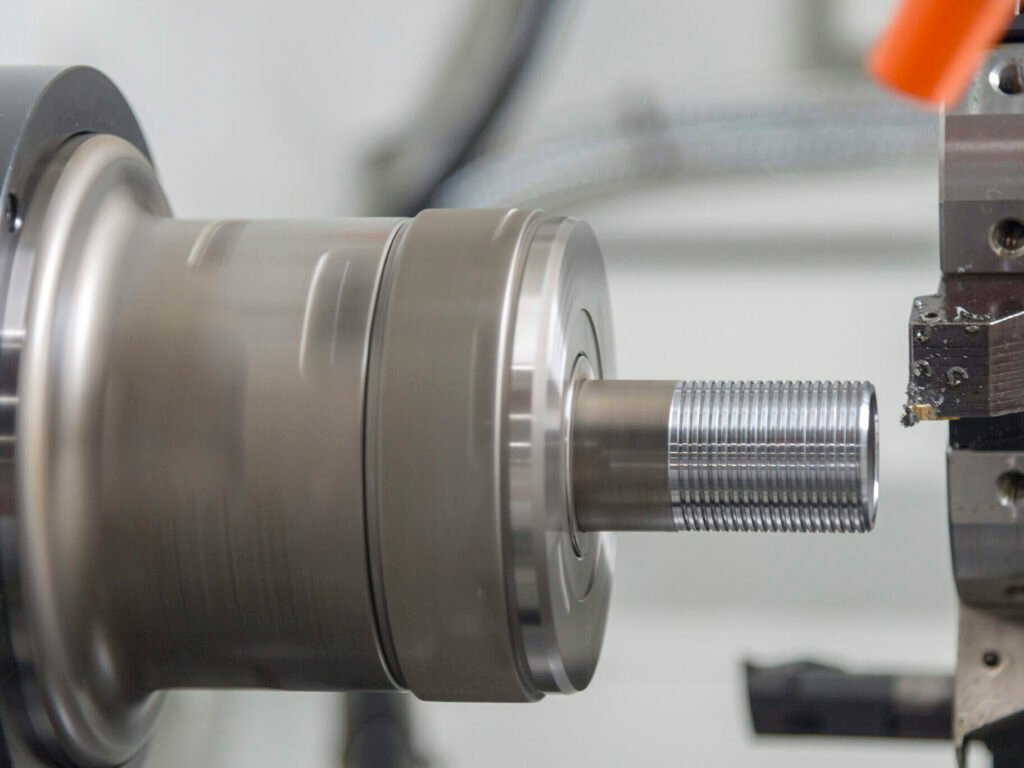
Processing methods are divided into cutting threads and rolling threads. During threading, the thread profile, pitch accuracy, and thread length are controlled carefully. Thread gauges are commonly used to verify thread quality and ensure connection.
Thread inspection with thread gauges to ensure thread accuracy and proper connection.
Step 6: Cleaning
This step removes impurities that accumulate during machining, preparing the surface for treatment.
Step 7: Surface Treatment
Black steel pipe nipples enhance corrosion resistance with anti-rust oil or black sandblasting.
Galvanized steel nipples need a zinc coating to prevent corrosion. The zinc coating process includes electro-galvanizing (cold galvanizing) and hot-dip galvanizing.
Stainless steel pipe nipples can be polished to make them beautiful and brighter.
Step 8: Quality Inspection
The main inspection items include pipe nipple length, OD, wall thickness, and thread quality.
Inspect dimensions, thread gauge, surface, and material against customer requirements and applicable standards.
For welded pipe nipples, attention is paid to weld seam quality. For seamless pipe nipples, inspection focuses on material, wall thickness consistency, and performance.
Step 9: Packaging
We offer two types of packaging: carton boxes and pallets. Small quantities are packed in cartons, while large volumes are packed on pallets.
Thread protectors or proper packing methods are used when necessary to prevent thread damage during transportation.
| Item | Welded Nipple | Seamless Nipple |
|---|---|---|
| Raw material | ERW welded pipe | Seamless steel pipe |
| Main advantage | Cost-effective | Higher pressure resistance |
| Inspection focus | Weld seam quality | Material performance |
| Common applications | General piping | High-pressure systems |
From raw material selection to final inspection, every step affects the quality and performance of pipe nipples. Choosing materials, accurate machining processes, and inspection methods ensure reliable connections.