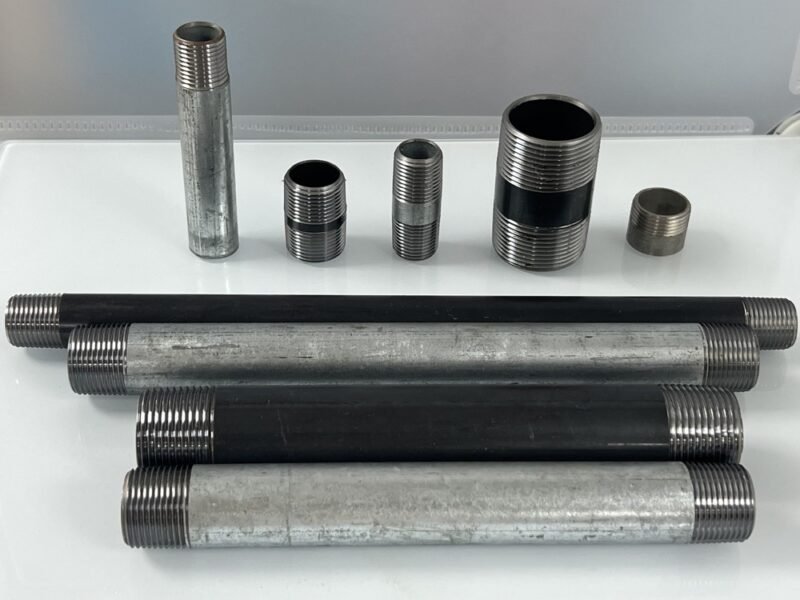
The right length and thread specification ensure leak-free, stability, and long-term performance.
Incorrect selection can lead to sealing failures, assembly issues, or even system downtime.
This guide explains everything you need to know.
1. How Pipe Nipple Length Is Defined
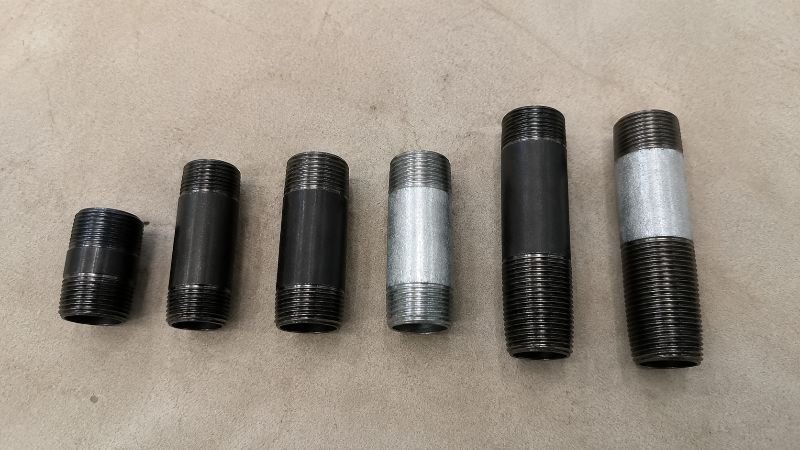
Pipe nipple length is not always the total physical length. It is typically measured as:
End-to-end effective length (excluding thread engagement allowances, depending on the standard)
Common length standards:
- 1” to 12” (most common range)
- Custom lengths available for industrial applications
Key rule:
Longer nipples reduce stress concentration and improve alignment flexibility, but increase space requirements.
3. How to Choose Pipe Nipple Length
3.1 Based on installation space
If space is tight:
- Use a close nipple or a short nipple
- Avoid long threaded engagement zones
If space is flexible:
- Choose a long nipple for easier assembly and reduced leakage risk
3.2 Based on vibration and mechanical stress
- High vibration systems (pumps, compressors):
→ Prefer longer nipples for better load distribution - Static systems (building plumbing):
→ Short or standard nipples are sufficient
3.3 Based on maintenance requirements
If frequent disassembly is required:
- Use longer nipple + union fittings
- Avoid close nipples (difficult to remove)
3.4 Based on flow resistance
- Longer nipples slightly increase friction loss
- In high-flow systems, keep length optimized but not excessive
4. Pipe Thread Types You Must Understand
Thread specification is just as important as length.
4.1 NPT (National Pipe Thread – U.S. standard)
- Tapered thread
- Self-sealing when tightened
- Most common in North America
4.2 BSP (British Standard Pipe)
- BSPT (tapered) and BSPP (parallel)
- Common in Europe, Asia, and UK markets
4.3 Metric threads (less common for nipples)
- Used in specialized industrial equipment
5. How to Choose the Correct Thread Size
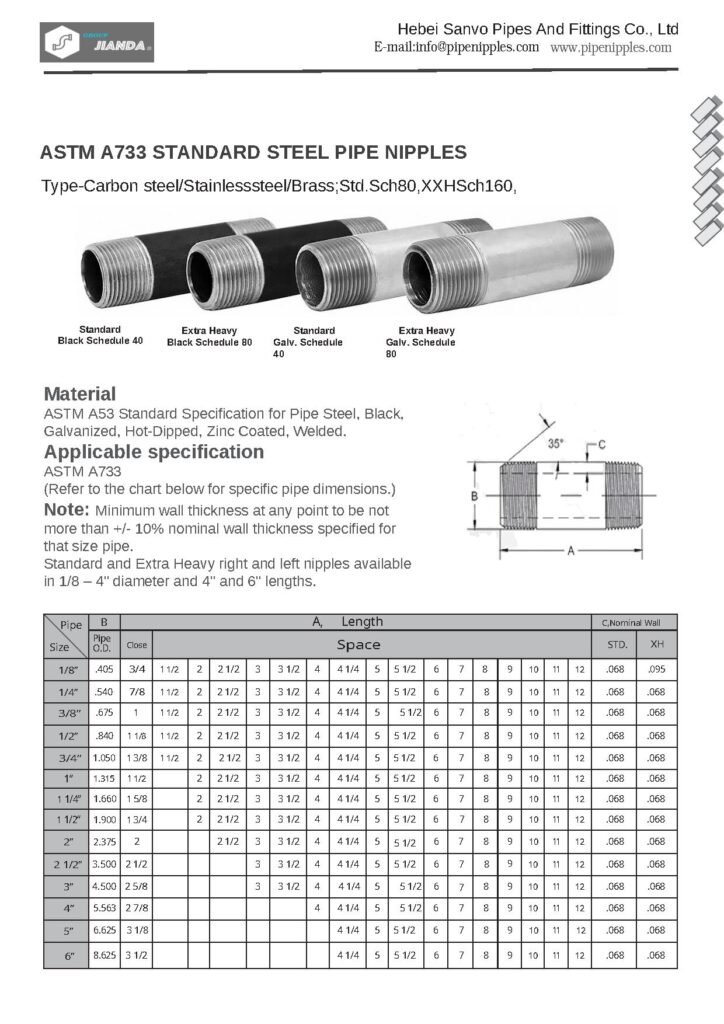
Thread size is NOT the actual outer diameter of the pipe. It is a nominal size.
Example:
- 1/2” NPT pipe does NOT measure 0.5 inches externally
- Actual OD is closer to 0.84 inches
Key selection factors:
5.1 Match system standard
- North America → NPT
- International projects → BSP or NPT depending on design
5.2 Match connected components
Never mix:
- NPT + BSP = leakage risk (even if it seems to fit)
5.3 Pressure rating considerations
- Higher pressure systems require:
- Tapered threads (NPT or BSPT)
- Proper sealing tape or sealant
6. Thread Size vs Pipe Size Table (Quick Reference)
7. Material Selection Affects Length & Thread Performance
Even with correct length and thread, material matters:
- Carbon steel → high strength, industrial use
- Stainless steel (304/316) → corrosion resistance
- Brass → plumbing and low-pressure systems
Material expansion and corrosion can affect thread sealing over time.
8. Common Mistakes to Avoid
❌ Choosing length based only on cost
Shorter is not always better—can increase leakage risk.
❌ Mixing thread standards
NPT and BSP are NOT interchangeable.
❌ Over-tightening tapered threads
Can crack fittings or distort sealing surfaces.
❌ Ignoring sealant requirements
Even NPT threads often require PTFE tape or pipe dope.
9. Professional Selection Checklist
Before purchasing pipe nipples, confirm:
- Required nominal pipe size
- Thread standard (NPT/BSPT/BSPP)
- Required length (close/short/long/custom)
- Operating pressure and temperature
- Fluid type (water, gas, chemical, oil)
- Installation space constraints
- Maintenance frequency
10. Conclusion
Pipe nipple with the right length and thread is a balance between system and operational.
A well-chosen design improves sealing reliability, reduces maintenance, and ensures long-term system stability.
For engineers and procurement teams, the key is simple:
Match thread standards first, then optimize length based on space, pressure, and maintenance.